Lactase turns lactose control into a commercial advantage
GalactoFrame is an independent technical resource for Lactase (β-Galactosidase) in dairy and whey processing. We translate enzyme performance into the outcomes procurement, R&D, QA, and production teams need: reliable lactose reduction, controlled sweetness, faster release decisions, cleaner labels, and specification-ready supply discussions.
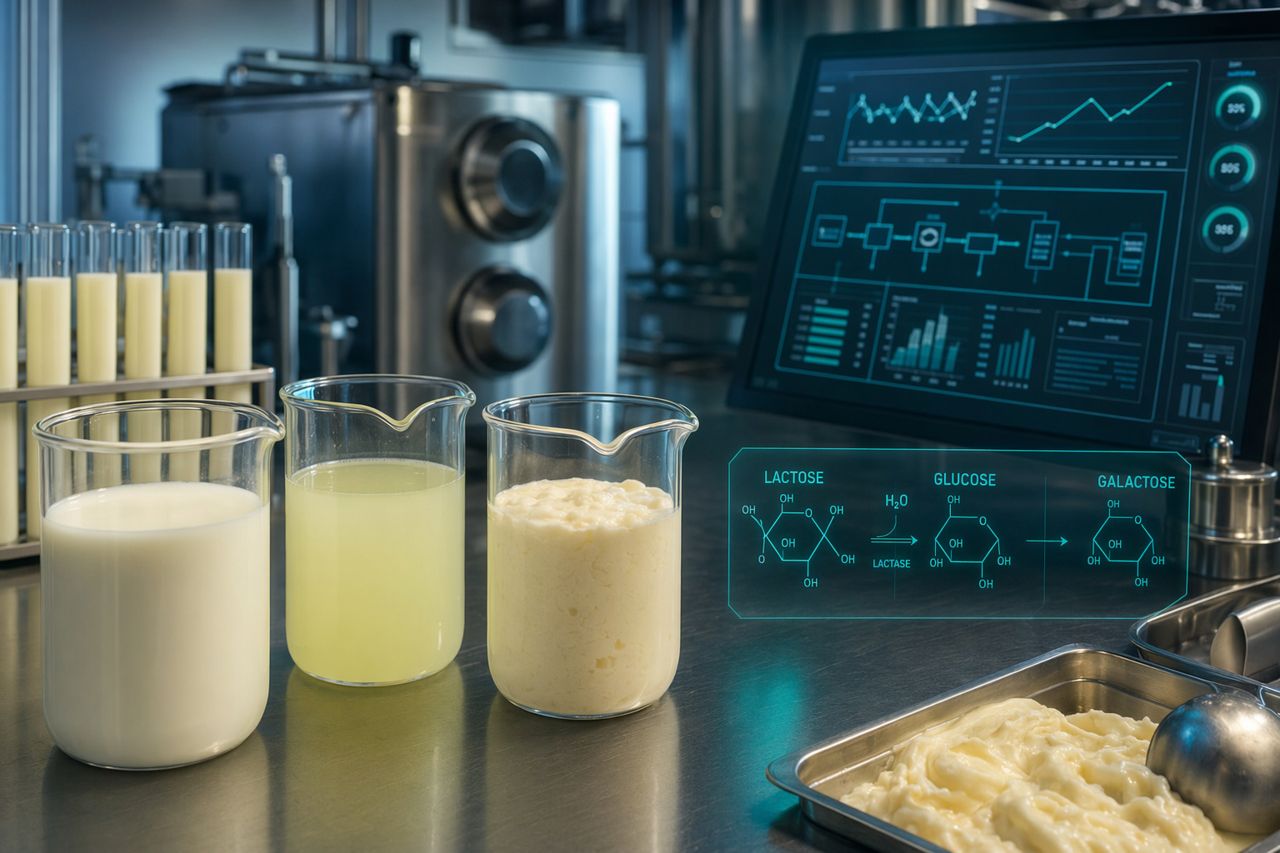
Lactase hydrolyzes lactose into glucose and galactose. In practice, that reaction changes far more than a nutrition panel. It can improve digestibility positioning, increase perceived sweetness without adding sugar, reduce lactose crystallization risk, and support smoother processing across milk, cream, fermented dairy, ice cream mixes, whey streams, and other dairy-based systems.
Built for B2B evaluation
Use this site to frame the right questions before sourcing or reformulating:
- Which lactase profile fits your matrix: milk, yogurt, UHT dairy, ice cream, whey, or permeate?
- Should the process target pre-hydrolysis, in-tank treatment, membrane-adjacent processing, or post-blend adjustment?
- How will lactose conversion affect sweetness, freezing behavior, viscosity, browning potential, and shelf-life stability?
- What documentation is required for purchasing, regulatory review, allergen statements, label claims, or customer audits?
- How should enzyme selection align with plant temperature, pH, hold time, microbial controls, and downstream heat treatment?
What Lactase does in dairy systems
Lactase, also known as β-galactosidase, cleaves the glycosidic bond in lactose. The resulting glucose and galactose are more soluble and sweeter-tasting than lactose, which is why lactase is central to lactose-free milk and value-added dairy development.
Operational outcomes
Lactose reduction
Supports lactose-free and lactose-reduced dairy targets when process time, temperature, dose strategy, and matrix conditions are aligned.
Sweetness control
Hydrolysis naturally increases perceived sweetness, allowing formulation teams to manage sugar perception without simply adding sweeteners.
Crystallization management
By reducing intact lactose, lactase can help limit sandy texture in ice cream, condensed dairy, high-solids milk systems, and whey-derived ingredients.
Process flexibility
Different lactase profiles support different production routes, including chilled pre-hydrolysis, controlled tank processing, and applications where heat stability or low-pH performance matters.
Cleaner label support
Lactase enables lactose-free positioning through enzymatic conversion rather than aggressive formulation workarounds.
Application areas
Lactose-free milk and cream
For fluid dairy, lactase selection affects conversion speed, residual sweetness, sensory balance, and compatibility with pasteurized, ESL, or UHT process designs. The key is not simply adding enzyme; it is integrating lactase into the plant’s hold time, microbial control plan, and release criteria.
Yogurt and fermented dairy
In yogurt systems, lactase can be used before fermentation or within carefully controlled processing windows. The hydrolysis effect may influence fermentation behavior, sweetness perception, and final flavor balance. Process mapping is essential because pH movement changes enzyme performance over time.
Ice cream and frozen desserts
Lactase helps reduce lactose crystallization risk while contributing natural sweetness. This is useful in premium dairy desserts, reduced-sugar concepts, high-solids mixes, and products where smooth texture is commercially critical.
Whey, permeate, and dairy ingredients
In whey processing, lactase can improve solubility, sweetness profile, and ingredient utility. For processors selling into beverage, bakery, confectionery, nutrition, or fermentation markets, hydrolyzed lactose streams may unlock better functionality and broader formulation acceptance.
Selecting the right lactase profile
Not all lactase products are interchangeable. A practical evaluation should compare the enzyme against your actual product matrix and process route.
Key selection criteria
- pH fit: Neutral dairy systems and acidic dairy systems may require different lactase profiles.
- Temperature behavior: Some processes prioritize low-temperature conversion; others require performance during warmer holding steps.
- Speed of hydrolysis: Faster conversion can shorten tank occupancy, but must be balanced against sensory and process control.
- Sensory neutrality: Enzyme choice can influence off-note risk, sweetness balance, and product consistency.
- Heat inactivation strategy: Downstream heat treatment may be needed to stop activity and lock the specification.
- Carrier and formulation compatibility: Liquid and powder formats can behave differently in dosing, storage, and plant handling.
- Documentation package: Buyers should review specification support, food-grade status, allergen information, origin, compliance statements, and batch traceability.
Commercial proof points for procurement and operations
A well-matched lactase can improve both product quality and plant economics.
- Shorter or more predictable hydrolysis windows
- Reduced rework linked to residual lactose variation
- Better alignment between sweetness target and label strategy
- Improved texture in high-solids and frozen dairy systems
- Clearer customer-facing lactose-free positioning
- More defensible purchasing specifications
- Lower formulation complexity when sweetness is generated enzymatically
Specification support without guesswork
GalactoFrame focuses on the buying conversation that happens before a purchase order: intended application, matrix, processing route, documentation needs, packaging preference, and commercial volume. The goal is to help technical and procurement teams define a lactase specification that can be quoted, sampled, validated, and scaled.
Information to prepare before requesting pricing
- Product category and dairy matrix
- Target lactose claim or internal residual lactose requirement
- Process temperature range and holding step description
- pH range during enzyme contact
- Batch size or estimated monthly usage
- Preferred liquid or powder format
- Required documentation for QA, regulatory, and customer approval
- Packaging, storage, and logistics requirements
Request a quote or get pricing
Tell us what you are processing and what commercial outcome you need. The GalactoFrame team will route your inquiry through this site’s own request form and respond with application-focused pricing guidance.
Prefer a fast commercial screen?
Use the same form and write “get pricing” in the message field. Include your application, format preference, and estimated monthly requirement so the response can be specific.