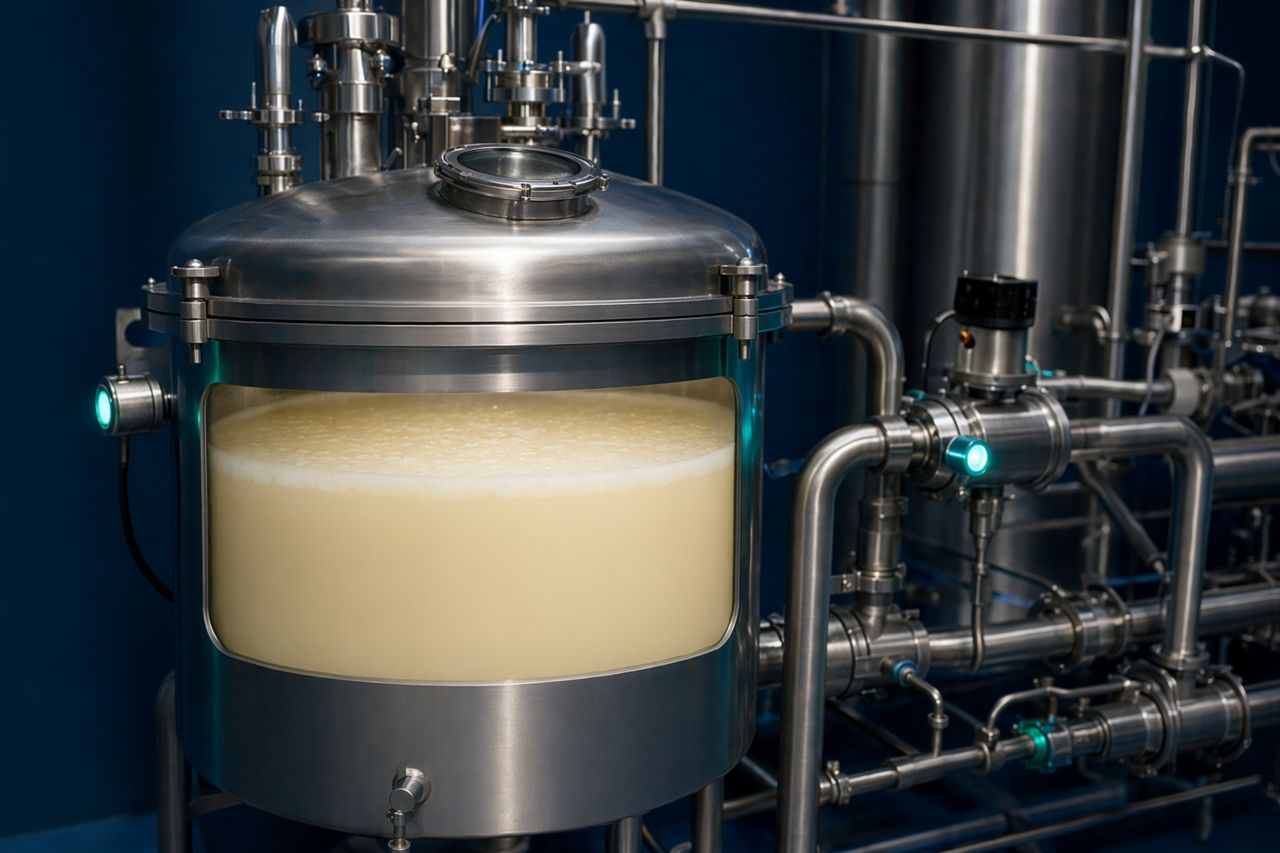
Lactose conversion for fermentation-ready dairy side streams
Lactose-rich streams can be commercially attractive feedstocks, but lactose is not always the sugar profile your production organism wants. Many yeasts, bacteria, and fungal strains consume glucose and galactose more readily than intact lactose.
We supply lactase in bulk to fermentation plants and ingredient makers that run whey permeate, milk permeate, mother liquor or recovered dairy solids. Hydrolysing the lactose before inoculation gives organisms that prefer glucose and galactose a feed they can use.
The outcome: a more accessible carbohydrate profile, better control before inoculation, and a cleaner route to using dairy side streams in industrial fermentation.
Wholesale and bulk supply for fermentation plants and resellers. Request a quote with the feedstock, the quantity and the delivery country. Prices and lead times are quoted per order.
Where lactase fits in the fermentation line
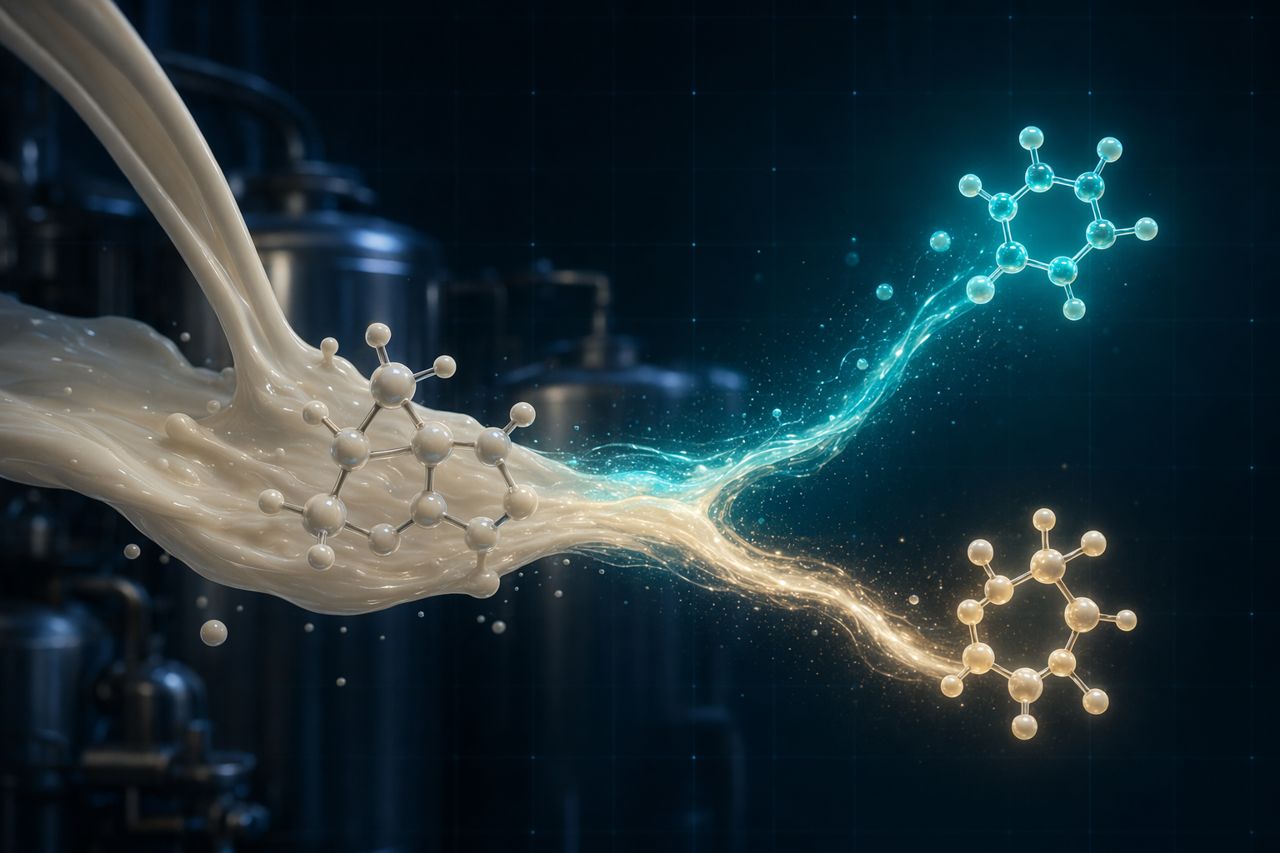
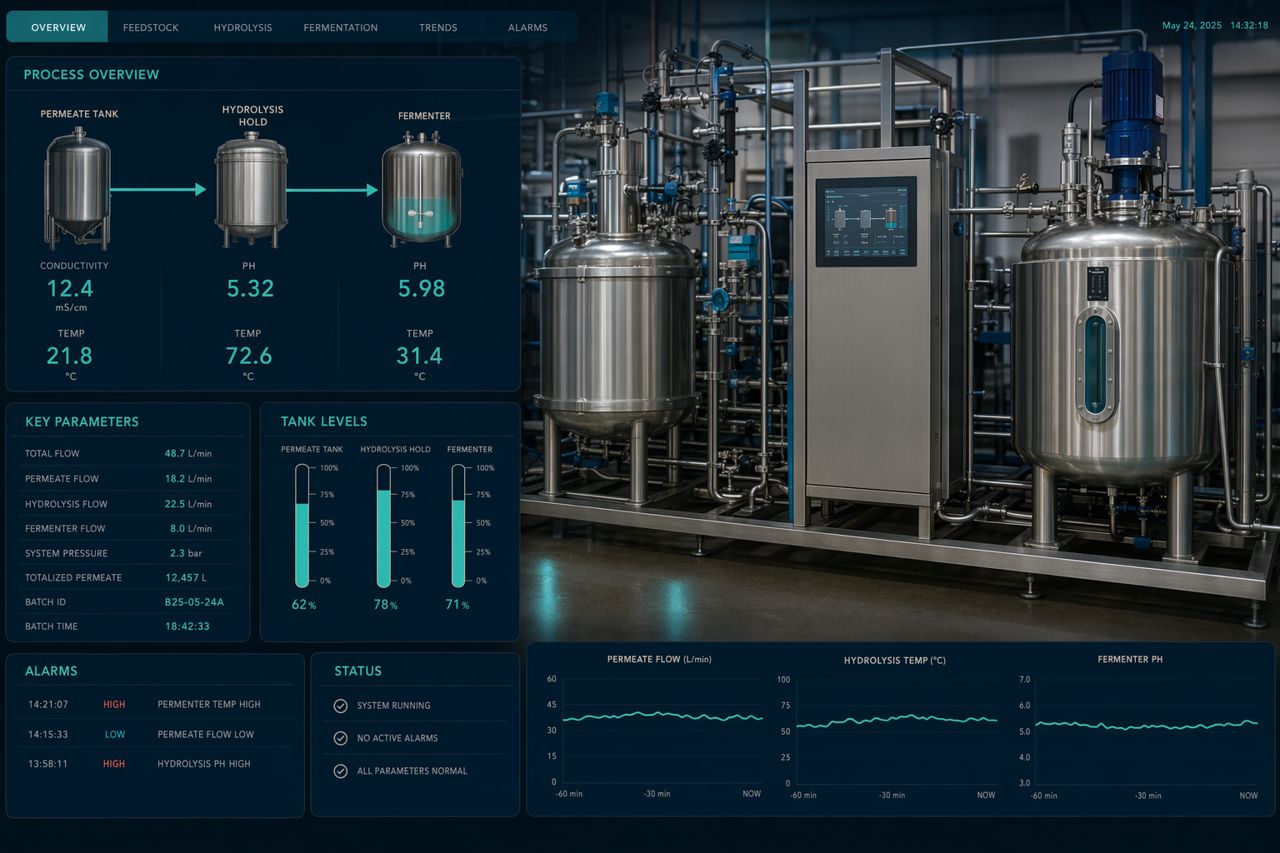
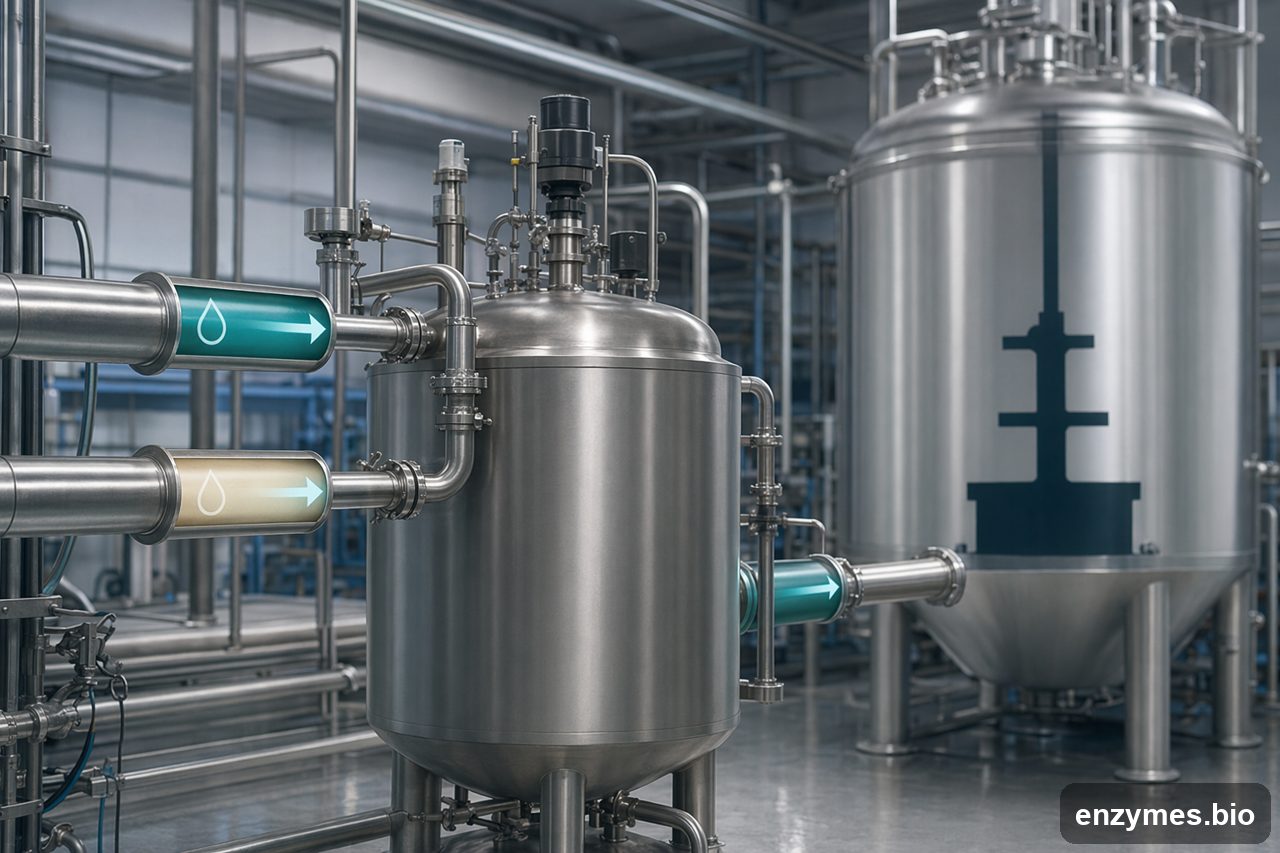
Lactase is typically used upstream of the fermenter, after feedstock standardization and before final conditioning. The enzyme cleaves lactose into glucose and galactose, allowing process teams to present the organism with sugars that may improve uptake and reduce the risk of lactose carryover.
Common implementation points include:
- Pre-hydrolysis tanks for controlled conversion before fermentation
- Inline hold systems where residence time and temperature are already managed
- Batch preparation vessels for permeate or concentrated dairy streams
- Feedstock conditioning steps before sterilization, pasteurization, or heat stop
- Blended substrate preparation when lactose-rich streams are combined with other carbon sources
Commercial reasons to hydrolyze lactose before fermentation
Improve sugar accessibility
Selected organisms may not metabolize lactose efficiently. Hydrolysis creates glucose and galactose, which can be more accessible depending on the strain and pathway design.
Reduce residual lactose risk
When residual lactose is undesirable in the downstream broth, product stream, or co-product, pre-treatment gives teams a controllable lever before the fermenter is loaded.
Support faster and more predictable starts
A defined sugar profile can help reduce lag associated with poor lactose utilization, especially when moving from lab substrate models to real dairy side streams.
Improve feedstock value
Whey permeate and other lactose-rich streams often carry commercial value but require conversion to match the biology. Lactase turns a challenging carbohydrate base into a more usable fermentation input.
Protect downstream positioning
When the final product is an ingredient, culture product, metabolite, biomass, or feed component, upstream lactose management can support better specification alignment and cleaner customer communication.
Suitable feedstock types
Lactase can be evaluated for lactose-bearing inputs such as:
- Sweet whey permeate
- Acid whey permeate, with process compatibility review
- Milk permeate
- Lactose mother liquor
- Recovered dairy solids streams
- Concentrated permeate syrups
- Dairy side streams blended with grain, starch, or sugar-based substrates
Actual fit depends on solids level, mineral load, pH, heat history, microbial control strategy, and the target conversion profile.
Process variables that matter
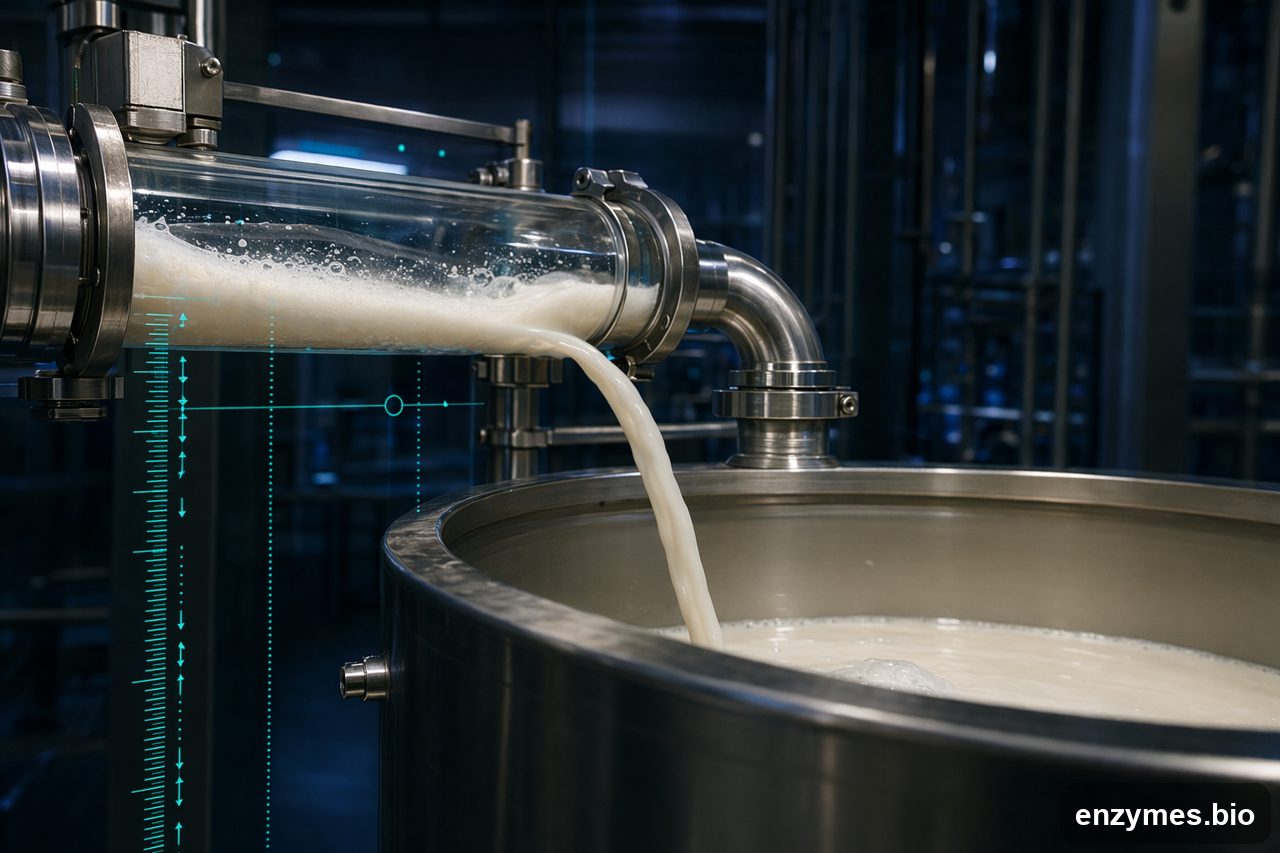
Lactase performance is not just a dosing question. The best result comes from matching enzyme selection and process conditions to the feedstock.
Key variables include:
- Starting lactose concentration and total dissolved solids
- Feedstock pH and buffering behavior
- Temperature window available in the plant
- Residence time before inoculation or heat treatment
- Mineral and salt load, especially in permeate-based streams
- Viscosity and mixing quality in concentrated systems
- Desired sugar profile for glucose, galactose, and remaining lactose
- Microbial control requirements before the fermenter
- Downstream heat-stop or enzyme inactivation plan
Lactase Enzyme Solutions supports these discussions at the specification level so the enzyme is selected for the operating window, not forced into one.
What lactase can and cannot solve
Lactase can convert lactose into glucose and galactose. It does not remove minerals, proteins, acids, inhibitors, or microbial contamination from the feedstock. For that reason, hydrolysis should be designed alongside feedstock clarification, thermal management, filtration, fermentation strain selection, and downstream purification.
For fermentation projects, the best commercial case is usually made when lactose is the bottleneck in an otherwise usable dairy stream.
Specification support for B2B buyers
Industrial buyers need more than an enzyme name. Lactase Enzyme Solutions can support procurement and technical teams with practical documentation discussions, including:
- Enzyme format and handling requirements
- Compatibility with food, feed, industrial, or ingredient applications
- Origin and manufacturing documentation
- Allergen and labeling considerations where applicable
- Regulatory and customer document packages
- Storage, shelf-life, and logistics requirements
- Batch-to-batch specification expectations
No two fermentation projects use identical substrates, organisms, or conversion targets. We help translate the feedstock challenge into a clear lactase specification.
Use cases we commonly support
- Converting whey permeate for microbial biomass production
- Preparing lactose-rich streams for organic acid fermentation
- Conditioning dairy side streams for yeast or fungal processes
- Reducing lactose carryover in ingredient fermentation broths
- Creating defined glucose-galactose feed profiles for pilot scale trials
- Improving the commercial value of permeate streams before offtake or internal reuse
Buyer checklist before requesting pricing
To move quickly, prepare the following details:
- Feedstock type and source
- Approximate lactose level or solids profile
- pH and temperature range available for treatment
- Batch, continuous, or semi-continuous operation
- Target residual lactose or desired sugar profile
- Planned point of enzyme addition
- Any downstream heat treatment or inactivation step
- Application category: food, feed, industrial, ingredient, or R&D scale-up
- Required documentation for your quality or customer approval process
Request a quote for lactase in fermentation feedstocks
We supply lactase for lactose-rich fermentation feedstocks.
Our stock grade is acid lactase powder in 1 kg packs, in three activity grades. For neutral liquid grades, ask us.
Send us:
- the feedstock and its lactose level
- the sugar profile your organism needs
- pH and temperature during the enzyme step
- the quantity per order or per month
- the delivery country
Prices, quantities and lead times are quoted per order.