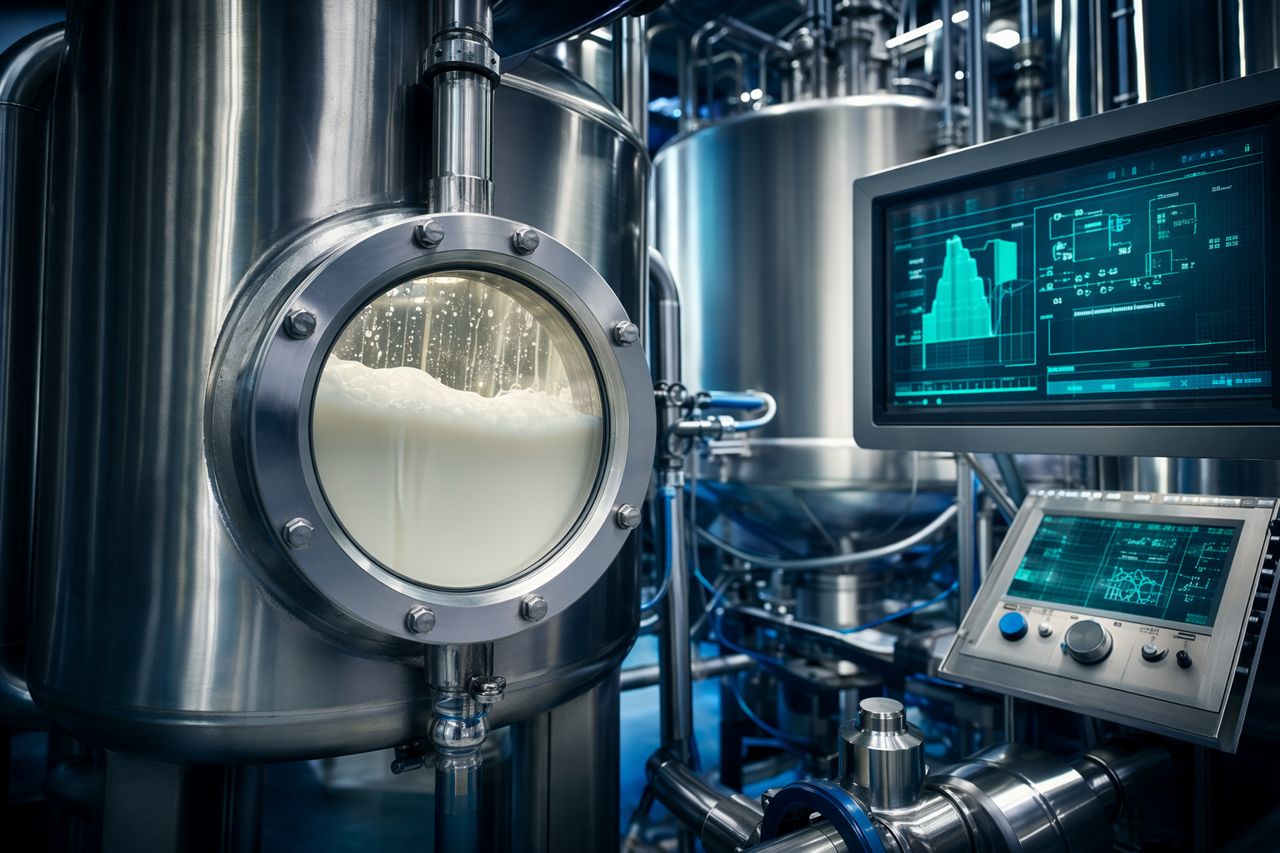
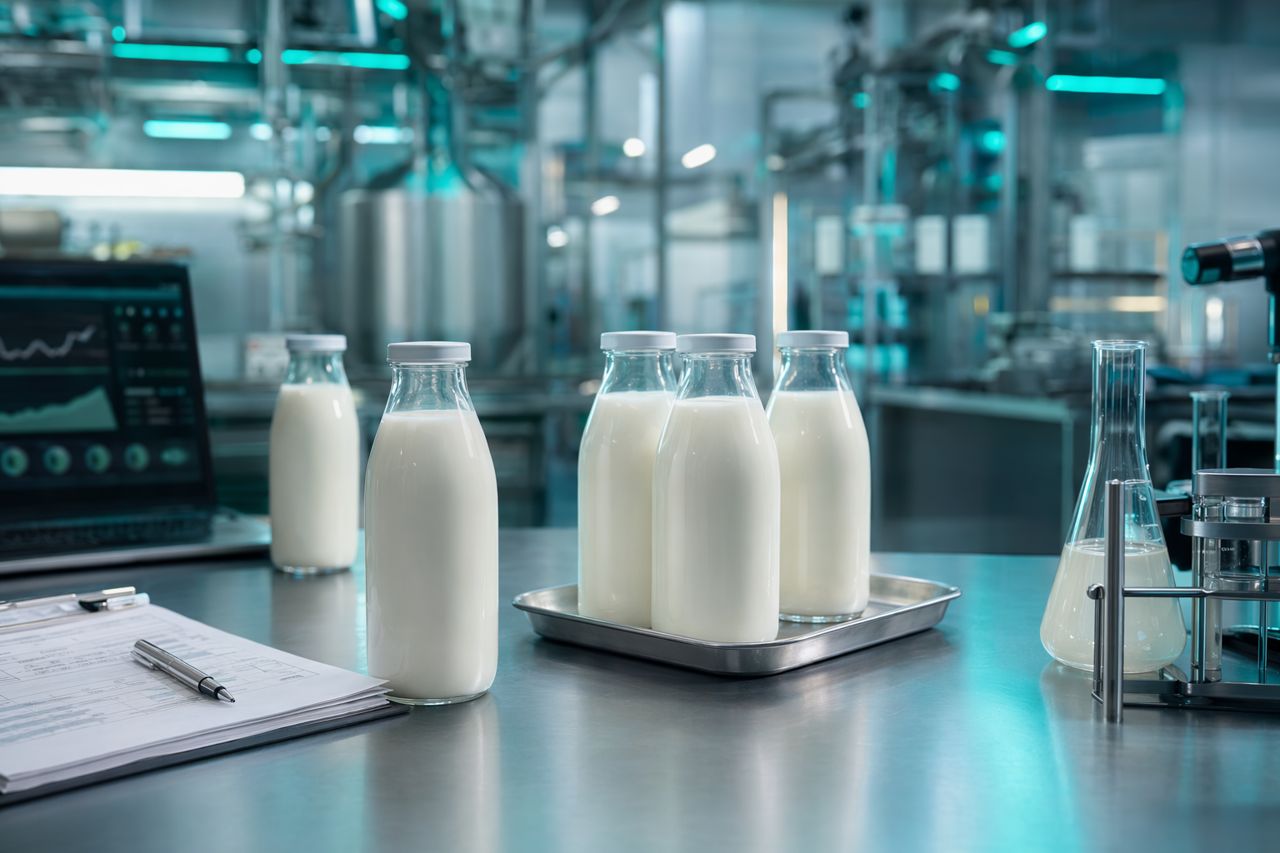
We supply lactase in bulk to dairies and contract packers making lactose-free and lactose-reduced milk, and to the distributors that serve them. Lactase (β-galactosidase) splits lactose into glucose and galactose; for a milk plant that means a lactose-free claim, a sweeter taste without added sugar, and one more product on the same line.
Fresh milk is close to neutral, so for liquid milk ask about neutral liquid grades. Our stock grade is acid lactase powder in 1 kg packs; send your milk pH and we confirm the fit before you order.
Wholesale and bulk supply for dairies, packers and resellers. Request a quote with the milk type, the quantity and the delivery country. Prices and lead times are quoted per order.
What lactase does in milk
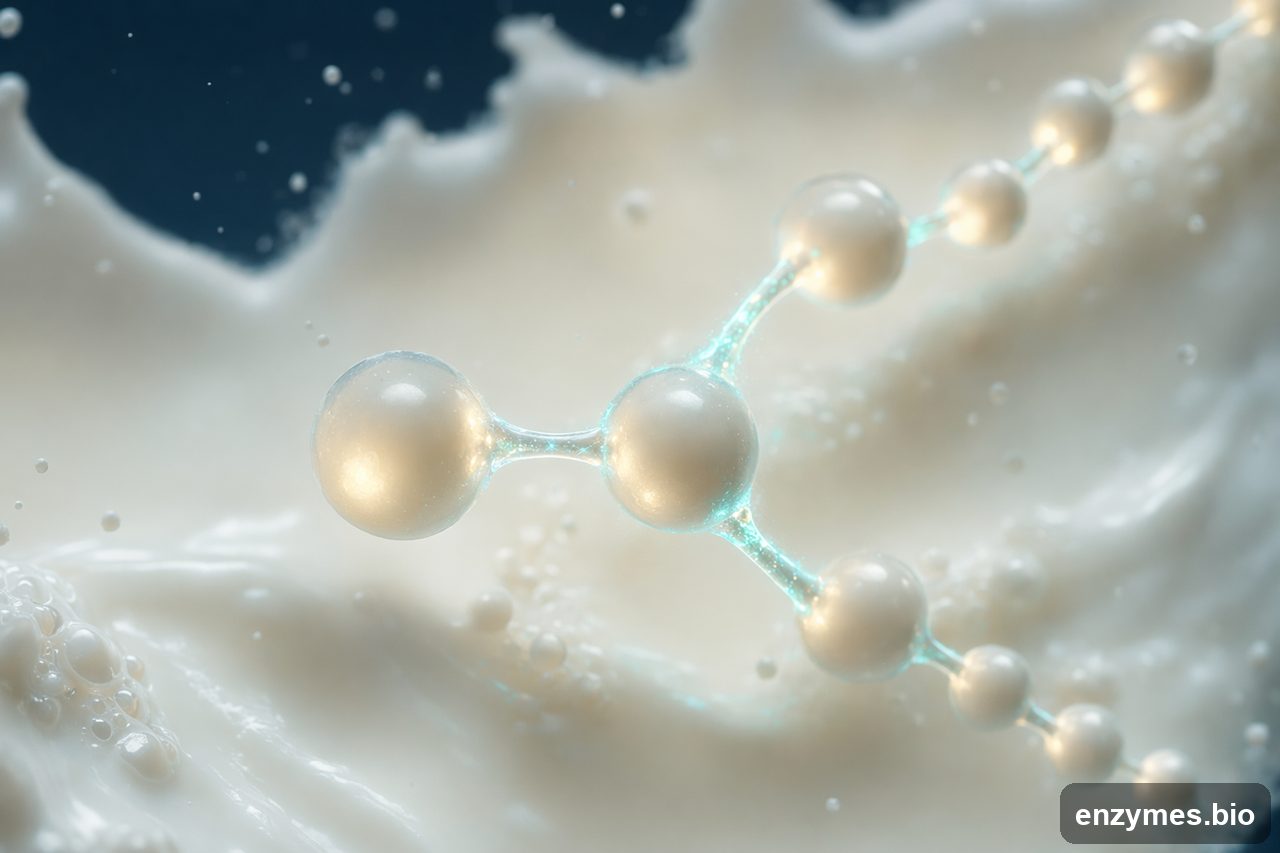
Lactose is the native disaccharide in milk. Lactase cleaves it into two simpler sugars: glucose and galactose. This change supports lactose-free positioning while also increasing perceived sweetness without adding sugar.
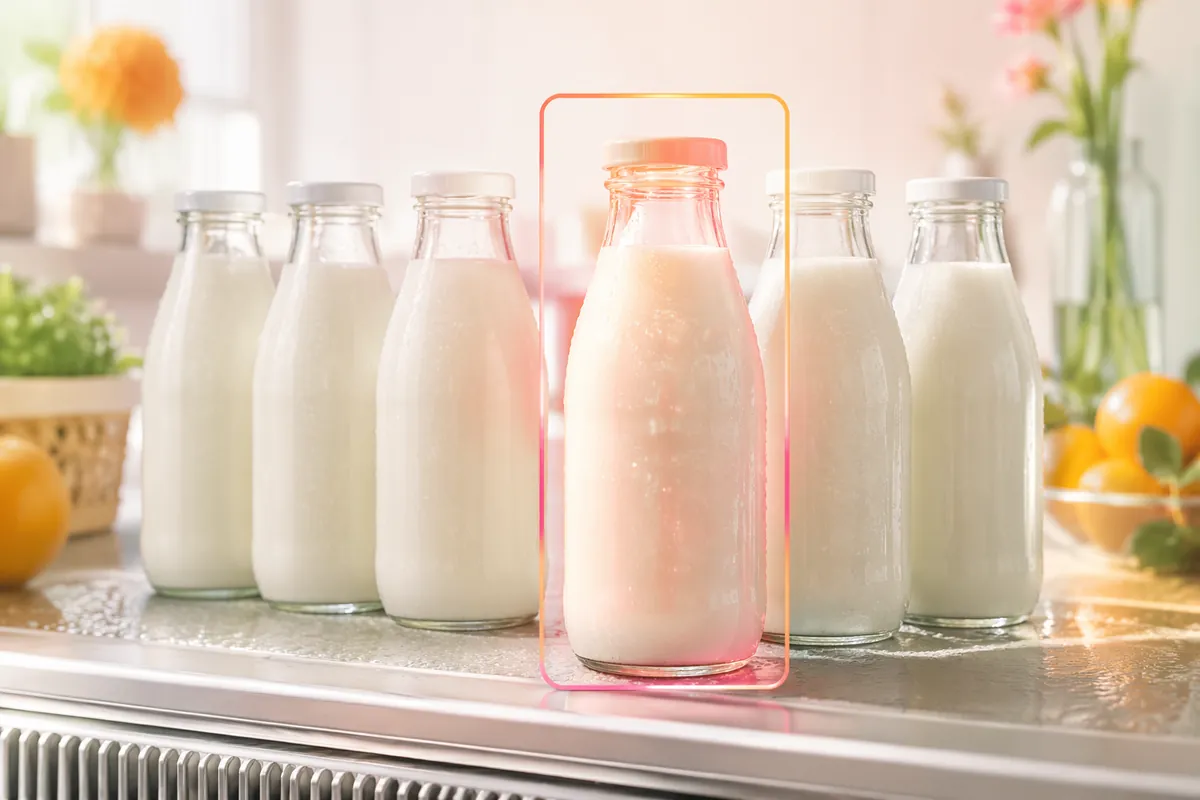
That makes lactase especially useful when a dairy brand needs to:
- Reduce lactose to meet product claims and market expectations
- Improve consumer tolerance for dairy beverages
- Increase sweetness perception without sucrose addition
- Maintain a short, recognizable label
- Support premium milk, UHT milk, flavored milk, and high-protein dairy formats
Commercial outcomes for lactose-free milk
Lactose reduction with process control
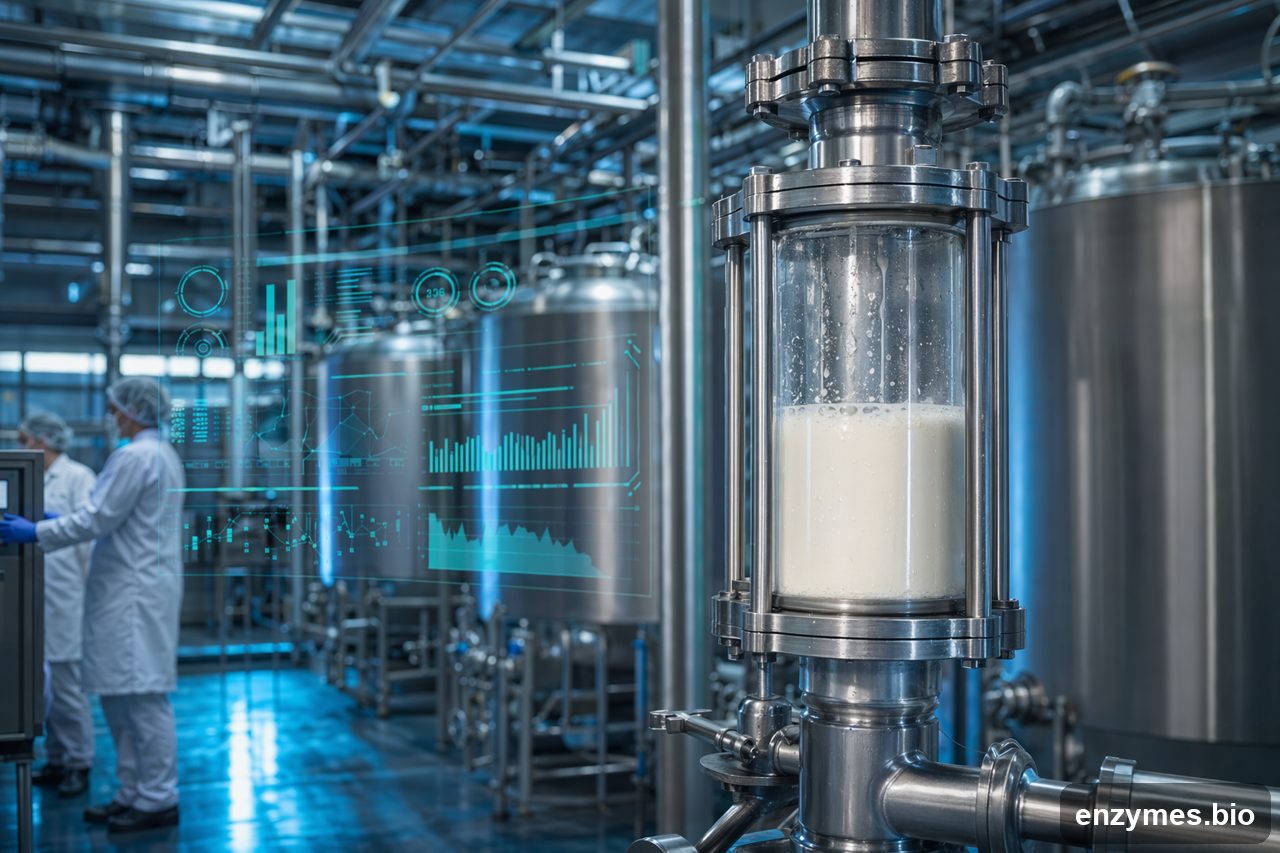
Lactase is selected for controlled lactose hydrolysis in dairy beverage systems. It can be integrated into batch holding, cold-side processing, or upstream steps before heat treatment depending on the plant design and desired release profile.
Naturally sweeter flavor profile
As lactose is hydrolyzed, glucose and galactose contribute a higher sweetness perception than lactose itself. This allows formulators to adjust sweetness targets while protecting a cleaner label and avoiding unnecessary added sugars.
Better consumer accessibility
Lactose-free and lactose-reduced milk gives consumers a familiar dairy experience with improved digestibility. For brands, this expands the addressable market without abandoning the nutritional equity of real milk.
Stable dairy beverage design
A well-specified lactase program helps protect taste consistency, product positioning, and downstream processing. Lactase Enzyme Solutions supports the specification work behind dependable scale-up, including ingredient compatibility and use-case alignment.
Where it fits in production
Lactase can be used across multiple lactose-free milk workflows:
- Standard pasteurized lactose-free milk
- Extended shelf life milk
- UHT lactose-free milk
- Flavored milk and cocoa milk
- Barista and premium dairy beverages
- High-protein milk systems
- Lactose-reduced bases for further formulation
The right approach depends on the milk matrix, heat process, holding time, target claim, flavor design, and packaging format.
Formulation considerations
Hydrolysis target
The commercial target defines enzyme selection and process timing. Some products require deep lactose reduction; others only need partial reduction for sensory or positioning purposes.
Sweetness balance
Lactase changes the sugar profile of milk. This can be an advantage, but it should be accounted for in flavored milk, protein-fortified milk, and products using sweeteners or flavor systems.
Heat process sequence
Plants may dose lactase before or after certain thermal steps depending on equipment design and product objectives. Lactase Enzyme Solutions helps technical buyers evaluate the most practical point of addition.
Shelf-life expectations
For ESL and UHT milk, lactose hydrolysis must align with microbial control, packaging, and long-term sensory stability. The enzyme program should be built around the full process, not only the reaction step.
Why buyers specify lactase
- Application-led selection for dairy beverage manufacturing
- Clean-label fit for lactose-free and lactose-reduced milk
- Consistent sweetness contribution through controlled hydrolysis
- Support for pasteurized, ESL, and UHT process concepts
- Practical documentation for procurement, QA, and formulation teams
- Commercially focused specification support without unnecessary complexity
Technical support scope
We help translate lactose targets and product claims into a workable enzyme approach for your plant.
Typical support topics include:
- Product format and process sequence
- Milk composition and solids profile
- Desired lactose-reduction claim
- Sweetness and flavor target
- Thermal process compatibility
- Packaging and shelf-life objectives
- Pack size, quantity and delivery
Request pricing for lactase
We supply lactase for lactose-free and lactose-reduced milk.
Our stock grade is acid lactase powder in 1 kg packs, in three activity grades. For neutral liquid grades, ask us.
Send us:
- the milk type (white, flavoured, UHT, ESL, pasteurized)
- the milk pH and the temperature and hold time you can give the enzyme
- the quantity per order or per month
- the delivery country
Prices, quantities and lead times are quoted per order.