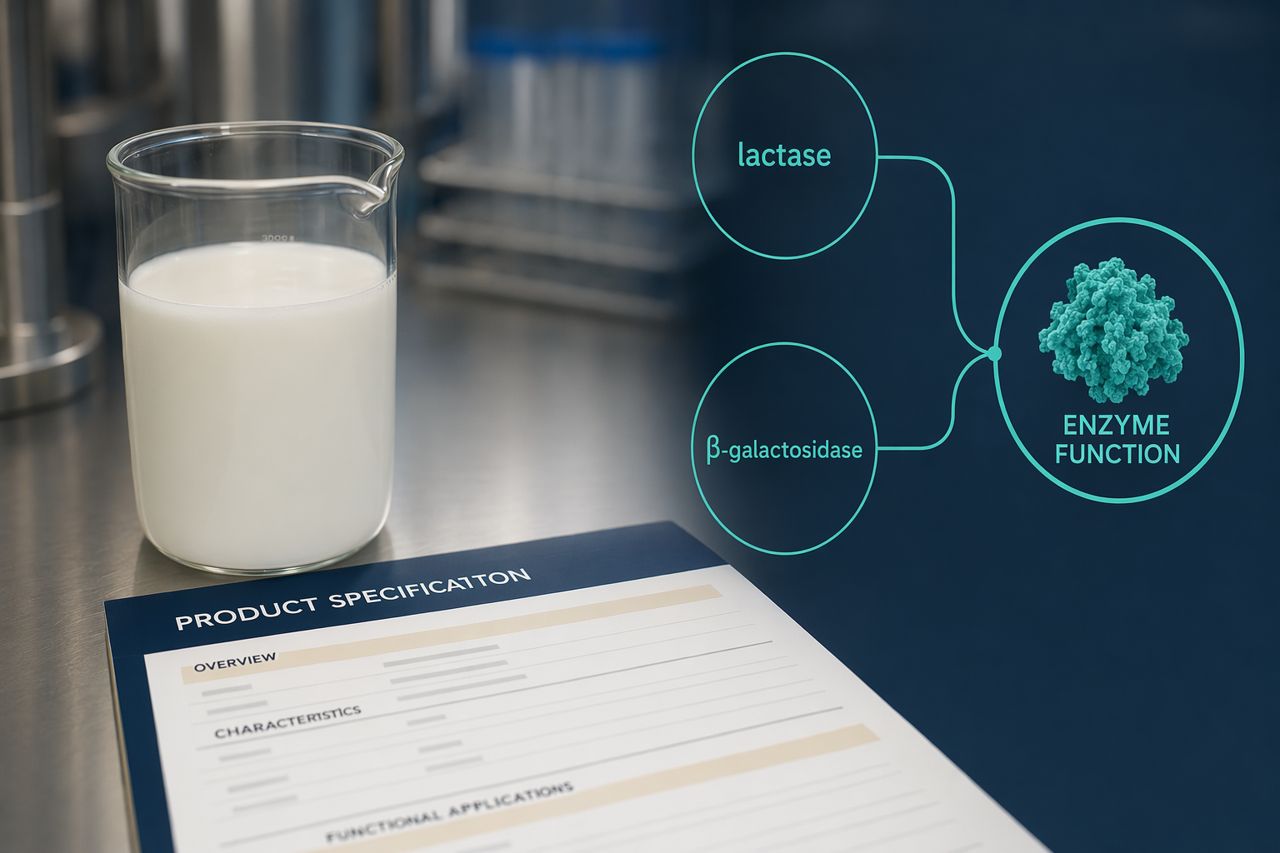
For most dairy and food-industry conversations, lactase and β-galactosidase refer to the same functional enzyme: the catalyst that hydrolyzes lactose into glucose and galactose.
The difference is usually one of context, not function.
- Lactase is the market-facing and application-facing term.
- β-Galactosidase is the technical and biochemical term.
Both terms matter. Food technologists use them when designing lactose reduction. Regulatory teams see them in ingredient documentation. Buyers encounter both across supplier specifications, certificates, labels, and import paperwork. Lactase Enzyme Solutions helps align that language so technical selection and commercial sourcing move in the same direction.
Buying lactase in bulk? Whether your specification says lactase or β-galactosidase, request a quote with the product, the quantity and the delivery country.
The short answer
Yes. Lactase is β-galactosidase when the enzyme is used to cleave lactose.
The enzyme breaks the β-galactosidic bond in lactose, producing two simpler sugars:
- Glucose
- Galactose
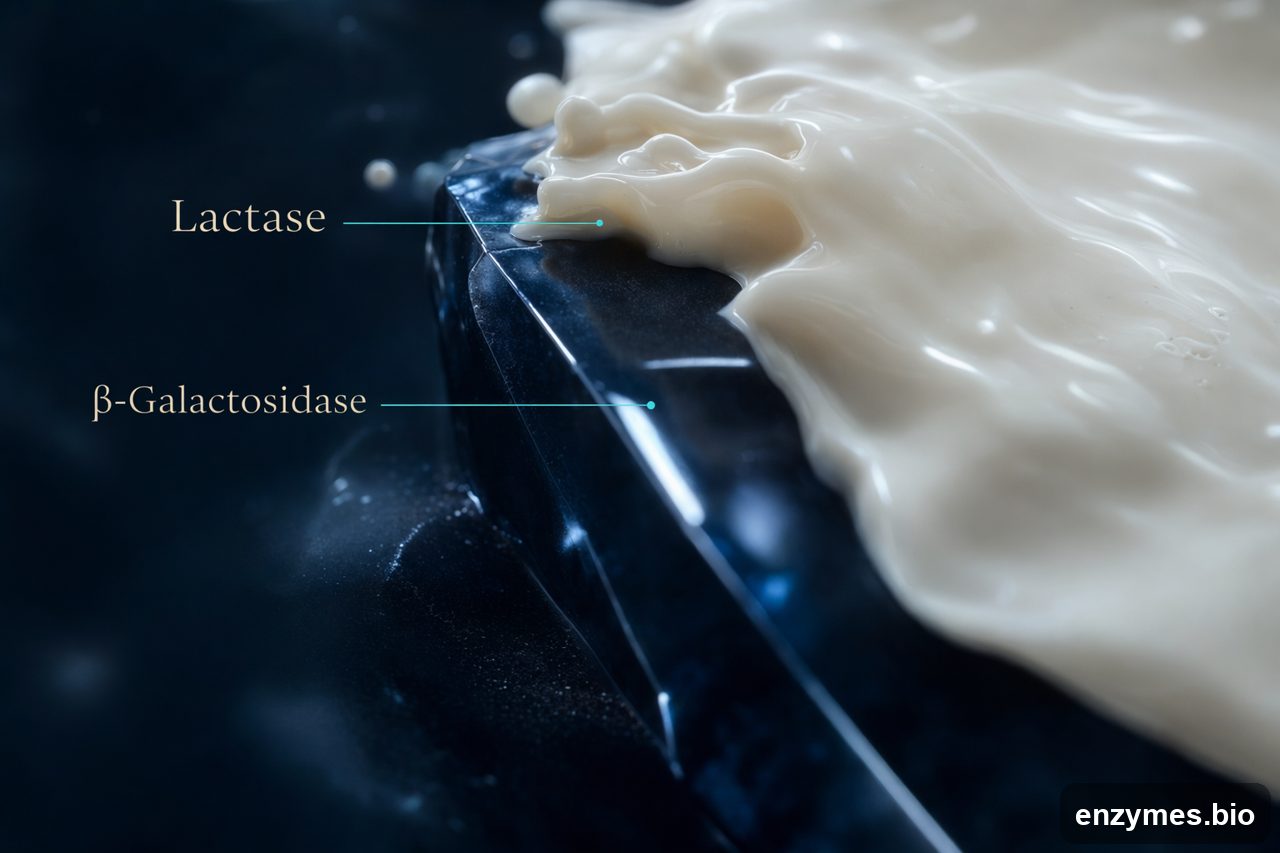
That conversion is the basis for lactose-reduced and lactose-free dairy systems, including milk, cream, whey streams, fermented dairy bases, ice cream mixes, and formulated dairy beverages.
In a purchase specification, the wording may vary:
| Term | Where it commonly appears | Practical meaning |
|---|---|---|
| Lactase | Commercial product name, dairy application notes, purchasing requests | Enzyme used for lactose hydrolysis |
| β-Galactosidase | Technical dossiers, regulatory files, enzyme classification, R&D documentation | Biochemical enzyme name |
| Lactase enzyme | Procurement, formulation, product development | Application-ready wording for dairy use |
| β-Galactosidase preparation | Supplier documentation, quality files | Enzyme preparation containing lactase function |
The key question is not whether the names are identical in every document. The key question is whether the enzyme preparation fits the processing target, matrix, regulatory position, and specification requirements.
Why the industry uses two names
Lactase is the application term
When a dairy processor says lactase, the focus is operational:
- Reduce lactose content
- Improve lactose-free claim readiness
- Manage sweetness without adding sugar
- Reduce crystallization risk in frozen or concentrated dairy
- Support cleaner label positioning
- Improve process consistency across batches
This term is concise, familiar, and commercially efficient. It speaks to what the enzyme does in the plant.
β-Galactosidase is the technical term
When a scientist, regulatory reviewer, or specification team says β-galactosidase, the focus is biochemical identity.
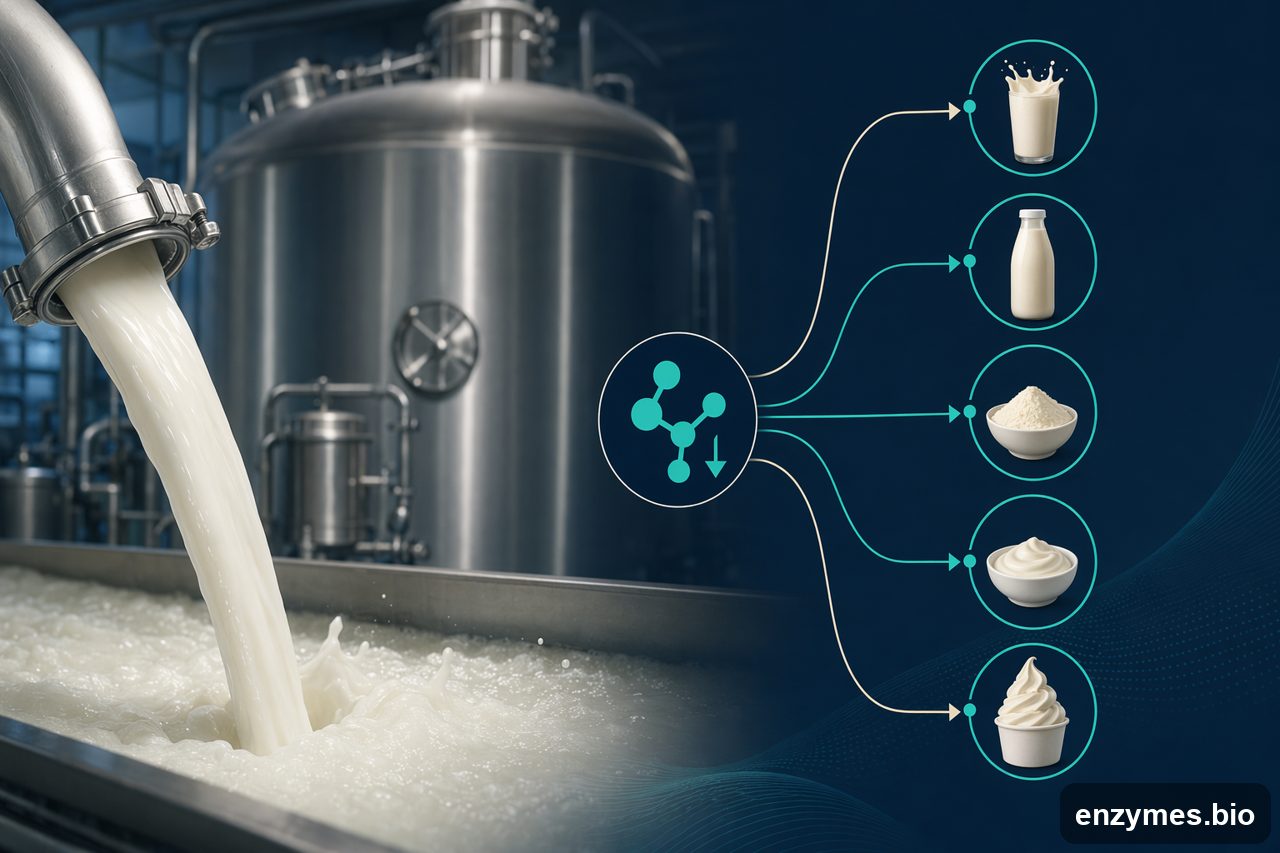
This term describes the enzyme’s catalytic function: hydrolysis of β-galactoside bonds. Lactose is the commercially important substrate in dairy, but the technical name comes from the broader enzyme function.
That is why a product may be called lactase on a commercial sheet and β-galactosidase in a regulatory or quality document.
What buyers should check beyond the name
Terminology alignment is only the first step. Two lactase products can both be β-galactosidase and still perform differently in production.
For B2B selection, evaluate the enzyme against the real use case:
1. Processing pH profile
Dairy applications do not all run under the same conditions. A lactase used in neutral milk processing is not always the right fit for acidic fermented systems. Confirm the enzyme is appropriate for the intended matrix and process window.
2. Temperature behavior
Some processes prioritize controlled hydrolysis during chilled holding. Others require faster lactose conversion in warmer processing steps. The right choice depends on whether the plant needs speed, control, or stability.
3. Matrix compatibility
Milk, whey, cream, ice cream mix, yogurt base, and beverage systems behave differently. Fat, protein, minerals, solids level, heat history, and viscosity can influence performance and handling.
4. Sweetness impact
Hydrolyzing lactose produces glucose and galactose, which taste sweeter than lactose. That can be an advantage in reduced-sugar dairy systems, but it must be designed into the formula. Lactase selection can support sweetness control without adding sweeteners.
5. Stability and downstream quality
Lactose hydrolysis can reduce lactose crystallization risk in frozen desserts, condensed dairy, and high-solids systems. This is one of the reasons lactase is used beyond lactose-free positioning.
6. Documentation readiness
Buyers should confirm availability of specification support, allergen statements where applicable, origin information, regulatory documentation, and batch-level quality documents. The wording may say lactase or β-galactosidase depending on the file type.
Is β-galactosidase always suitable for dairy?
Not automatically.
β-Galactosidase describes enzyme function, but industrial preparations are built for specific use conditions. Source organism, processing tolerance, purity profile, formulation format, and matrix behavior all matter.
For dairy manufacturing, the question should be:
Is this β-galactosidase preparation designed, documented, and supplied for lactose hydrolysis in my dairy application?
That question is more useful than relying on name matching alone.
Common sourcing confusion
“Our R&D team requested β-galactosidase, but purchasing is searching for lactase.”
That is normal. The same requirement may move through the organization under two names. Align the request around the intended use: lactose hydrolysis in a defined dairy matrix.
“The product label says lactase, but the technical document says β-galactosidase.”
Also normal. Commercial labels often use lactase. Technical documents often use β-galactosidase. Ask for the specification set and confirm the enzyme function, application fit, and regulatory support.
“Can we compare lactase products by name alone?”
No. Compare by application suitability, process fit, documentation, supplier reliability, and formulation format. The name confirms the enzyme type; it does not confirm production performance.
Practical terminology for specifications
If you are writing a request for quote, purchase specification, or supplier questionnaire, use both terms for clarity:
Recommended wording:
“Lactase (β-galactosidase) enzyme preparation for lactose hydrolysis in dairy applications.”
Then add the business-critical details:
- Dairy matrix or product type
- Target lactose reduction objective
- Process stage where enzyme will be added
- Required documentation package
- Form preference, such as liquid or powder
- Packaging, shelf-life, and logistics needs
- Regulatory market destination
This prevents misalignment between food technology, QA, regulatory, and procurement teams.
Bottom line
Lactase and β-galactosidase are functionally the same enzyme term in dairy lactose hydrolysis.
Use lactase when discussing commercial dairy outcomes. Use β-galactosidase when technical precision is required. Use Lactase (β-Galactosidase) in purchasing and specification documents when both audiences need to stay aligned.
For buyers, the name is only the entry point. The real decision is whether the enzyme fits the plant, formula, compliance route, and supply requirements.
Request pricing or specification support
Need help matching Lactase (β-Galactosidase) terminology to your dairy application, quote request, or internal specification?
Use the form below to request pricing, documentation support, or application guidance from Lactase Enzyme Solutions.