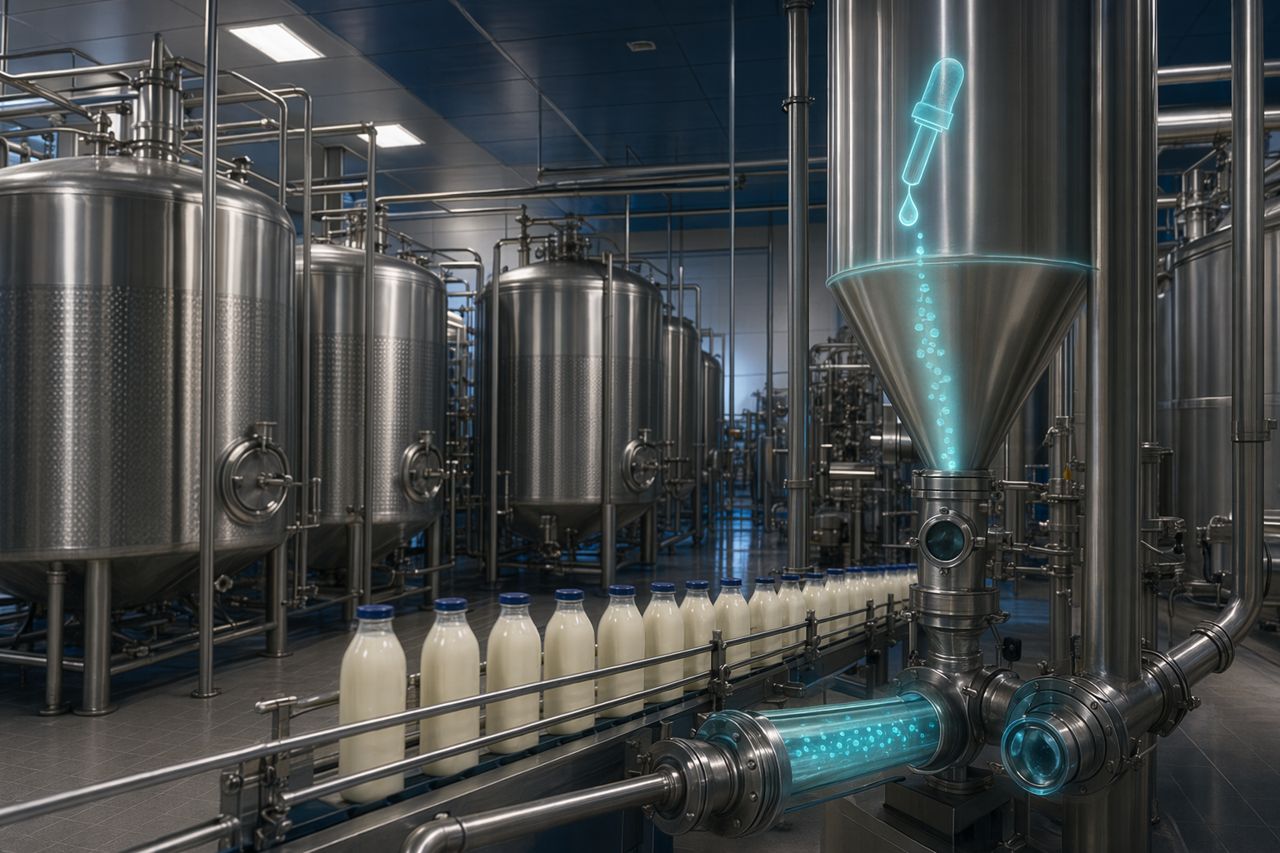
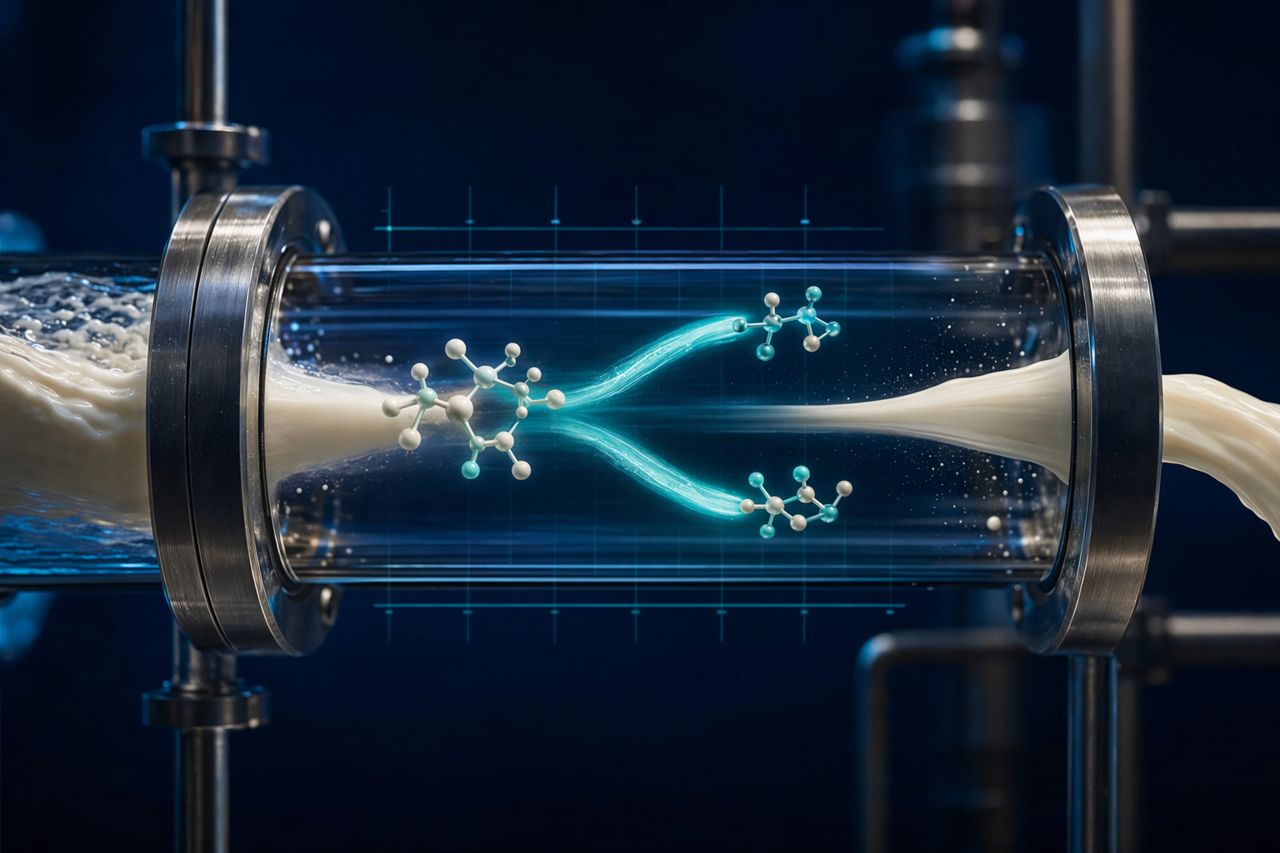
Lactase is the production enzyme behind most lactose-free milk. In dairy processing, Lactase (β-Galactosidase) hydrolyzes lactose into glucose and galactose, reducing lactose content while changing sweetness, heat behavior, and finished-product sensory profile.
We supply lactase in bulk to dairies, contract packers and distributors. For a milk plant the buying question is whether a grade fits your milk, your heat route, your hold time and your pack format; this page walks through those decisions in the order a plant makes them.
Wholesale and bulk supply for dairies, packers and resellers. Request a quote with the milk type, the quantity and the delivery country. Prices and lead times are quoted per order.
What lactase does in milk
Lactose is a disaccharide naturally present in milk. Lactase cleaves that molecule into two monosaccharides:
- Glucose
- Galactose
Both are more soluble and sweeter-tasting than lactose. This is why lactose-free milk often tastes slightly sweeter even when no sugar is added. The sweetness shift is a process outcome, not a formulation trick.
In practical terms, lactase supports:
- Lactose reduction for lactose-free or lactose-reduced positioning
- Sweeter perception without added sucrose
- Improved lactose solubility in concentrated or frozen dairy systems
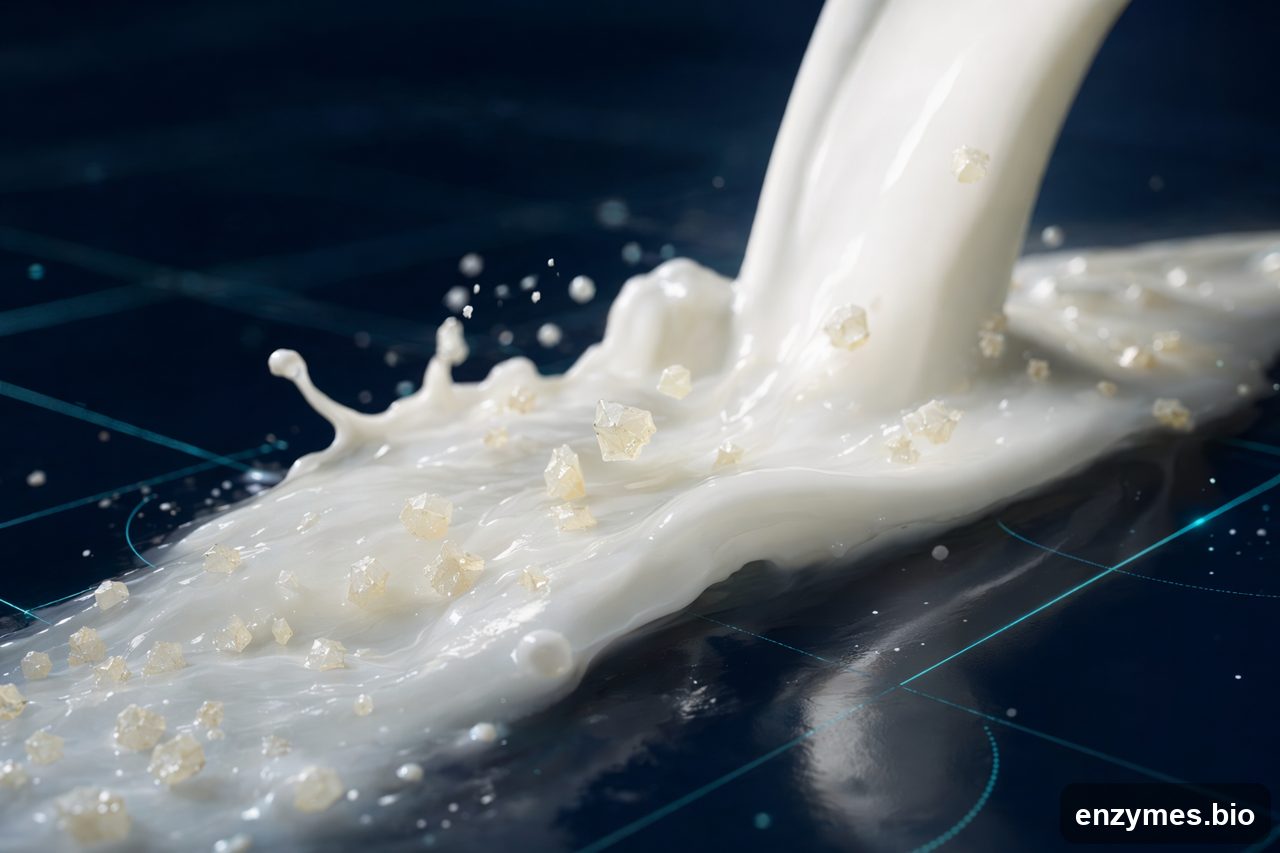
- Reduced crystallization risk in ice cream mix, condensed milk, and high-solids dairy bases
- Cleaner label positioning when sweetness can be adjusted through lactose hydrolysis rather than added sweeteners
How lactose-free milk is made with lactase
Lactase can be used in different process configurations. The best route depends on target shelf life, plant layout, thermal treatment, microbial control, and how quickly the producer needs lactose conversion to occur.
1. Cold hydrolysis before packaging
In cold hydrolysis, lactase is added to chilled milk and allowed to work during refrigerated holding.
Where it fits:
- Pasteurized lactose-free milk
- Plants with available refrigerated tank capacity
- Operations prioritizing mild processing and controlled flavor development
Commercial advantages:
- Lower thermal stress on the enzyme system
- Straightforward integration into existing chilled milk handling
- Useful when production planning allows sufficient holding time
Key controls:
- Uniform enzyme dispersion in the tank
- Validated contact time under plant temperature conditions
- Hygienic holding and tank turnover discipline
- Finished lactose verification against the target market requirement
2. Warm hydrolysis before heat treatment
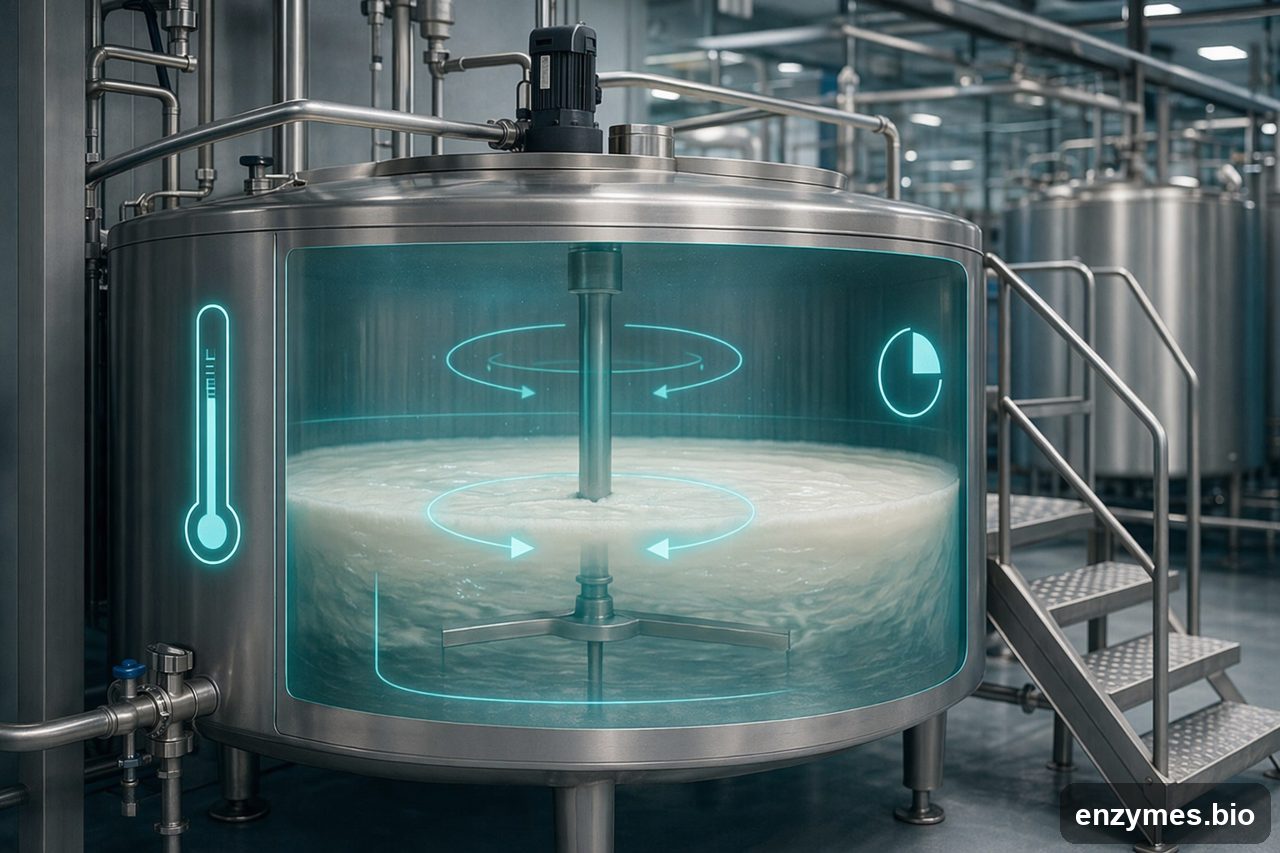
Warm hydrolysis accelerates conversion by operating at a temperature range favorable to the enzyme, followed by pasteurization or other heat treatment.
Where it fits:
- Higher-throughput operations
- Plants seeking faster conversion before filling
- Dairy systems where tank time is a bottleneck
Commercial advantages:
- Shorter process time versus refrigerated hydrolysis
- Better scheduling control for larger batches
- Heat treatment can help inactivate residual enzyme activity if required by the process design
Key controls:
- Time-temperature profile
- Microbial management during warm holding
- Prevention of excessive sweetness development
- Heat-related flavor and color management after hydrolysis
3. Aseptic or sterile dosing after UHT treatment
For UHT and extended shelf-life milk, lactase may be dosed into sterile product after heat treatment under controlled aseptic conditions.
Where it fits:
- UHT lactose-free milk
- Ambient-stable dairy beverages
- Operations where hydrolysis continues inside the sealed package
Commercial advantages:
- Avoids exposing the enzyme to severe heat treatment before it acts
- Supports long shelf-life formats
- Can reduce process hold time before packaging
Key controls:
- Sterile enzyme quality and handling compatibility
- Dosing accuracy and distribution
- Package incubation profile
- Shelf-life monitoring for sweetness, browning, and residual lactose targets
Process decisions that determine success
Enzyme fit to milk pH and temperature
Milk is not a neutral laboratory substrate. Its protein, fat, mineral balance, pH, and heat history all influence enzymatic performance. A lactase grade should be selected for the actual dairy matrix and operating conditions, not for a generic performance statement.
Ask for specification support that addresses:
- Recommended dairy applications
- Suitable process temperature window
- pH compatibility
- Ingredient carrier profile
- Microbiological and contaminant controls
- Allergen, dietary, and compliance documentation relevant to your market
Contact time and throughput
Lactose conversion depends on enzyme concentration, temperature, mixing, substrate level, and time. Since every plant has different tanks, line speeds, and shelf-life targets, the commercial decision is usually a balance between:
- Enzyme cost per batch
- Available residence time
- Tank occupancy
- Filling schedule
- Target lactose specification
- Sensory limits for sweetness
A stronger lactase solution is not automatically the best solution. The right choice is the one that reaches specification predictably inside your process economics.
Sweetness control
Hydrolyzed lactose creates glucose and galactose, increasing perceived sweetness. This can be an advantage in flavored milk, coffee beverages, and some nutritional drinks. In plain white milk, it must be controlled carefully.
Common tactics include:
- Validating hydrolysis level against sensory panels
- Adjusting flavor systems in chocolate or coffee milk
- Managing post-package hydrolysis in UHT products
- Setting a clear release specification for lactose and sweetness profile
Heat stability and browning
Glucose and galactose are reducing sugars. After hydrolysis, milk may show different heat behavior during severe thermal processing or long storage. This matters most in UHT, retorted dairy beverages, high-protein drinks, and concentrated milk systems.
Process teams should monitor:
- Color development during heat treatment and storage
- Cooked flavor notes
- Protein stability in the finished beverage
- Interaction with added minerals, cocoa, coffee, stabilizers, or proteins
Microbial and documentation requirements
Lactase is a processing input that must fit the plant’s quality system. Buyers should evaluate more than price.
Typical procurement checkpoints include:
- Product specification sheet
- Food-grade status and traceability
- Lot-to-lot consistency
- Microbiological specification
- Heavy metal and contaminant controls where applicable
- Country-of-origin and regulatory documentation
- Halal, kosher, vegetarian, or non-GMO documentation if required
- Shelf-life and storage guidance
Common dairy applications beyond plain milk
Lactase is used wherever lactose reduction or lactose solubility improves commercial performance.
Lactose-free white milk
The core application. The goal is reliable lactose reduction with a clean dairy flavor and controlled sweetness.
Flavored milk and dairy beverages
Hydrolysis can support sweetness reduction strategies because the product tastes sweeter without adding more sugar. Cocoa, coffee, vanilla, fruit, and protein systems should be tested because each matrix changes flavor perception.
Ice cream and frozen dairy
Lactase reduces lactose crystallization risk in high-solids frozen systems, improving texture stability and reducing sandy defects.
Condensed and evaporated milk
Hydrolysis can improve lactose solubility, but browning and heat stability require close process validation.
Yogurt and fermented dairy bases
Lactase can support lactose-reduced fermented products, though acidification, starter culture behavior, and sweetness profile must be evaluated together.
Buying checklist for lactase in lactose-free milk
Before approving a lactase supplier or grade, align the enzyme with your plant reality:
- What milk type will be processed: whole, skim, standardized, flavored, protein-fortified, UHT, or ESL?
- Will hydrolysis occur cold, warm, or after sterile dosing?
- What lactose target is required in the destination market?
- How much tank time is available?
- Will sweetness increase help or hurt the product concept?
- Is heat treatment applied before or after hydrolysis?
- Are there risks of browning, cooked notes, or protein instability?
- What documentation is needed for quality, export, audit, or customer approval?
- How will residual lactose and sensory profile be verified batch-to-batch?
Buying lactase for a lactose-free milk line
Fresh milk is close to neutral, so for liquid milk ask about neutral liquid grades. Our stock grade is acid lactase powder in 1 kg packs, in three activity grades; send your milk pH and we confirm the fit before you order.
A milk line buys for recurring production. Tell us the first order and the monthly volume; prices, pack quantities and lead times are quoted per order.
A grade that fits the line helps production teams:
- Reduce rework caused by missed lactose targets
- Improve batch scheduling and tank utilization
- Maintain consistent sweetness and flavor
- Scale from pilot trials to routine production with fewer surprises
Request lactase pricing or technical fit guidance
We supply lactase for lactose-free and lactose-reduced milk lines.
Our stock grade is acid lactase powder in 1 kg packs, in three activity grades. For neutral liquid grades, ask us.
Send us:
- the milk type and the route (cold hydrolysis, warm hydrolysis, sterile dosing after UHT)
- the milk pH and the hold time you can give the enzyme
- the quantity per order or per month
- the delivery country
Prices, quantities and lead times are quoted per order.