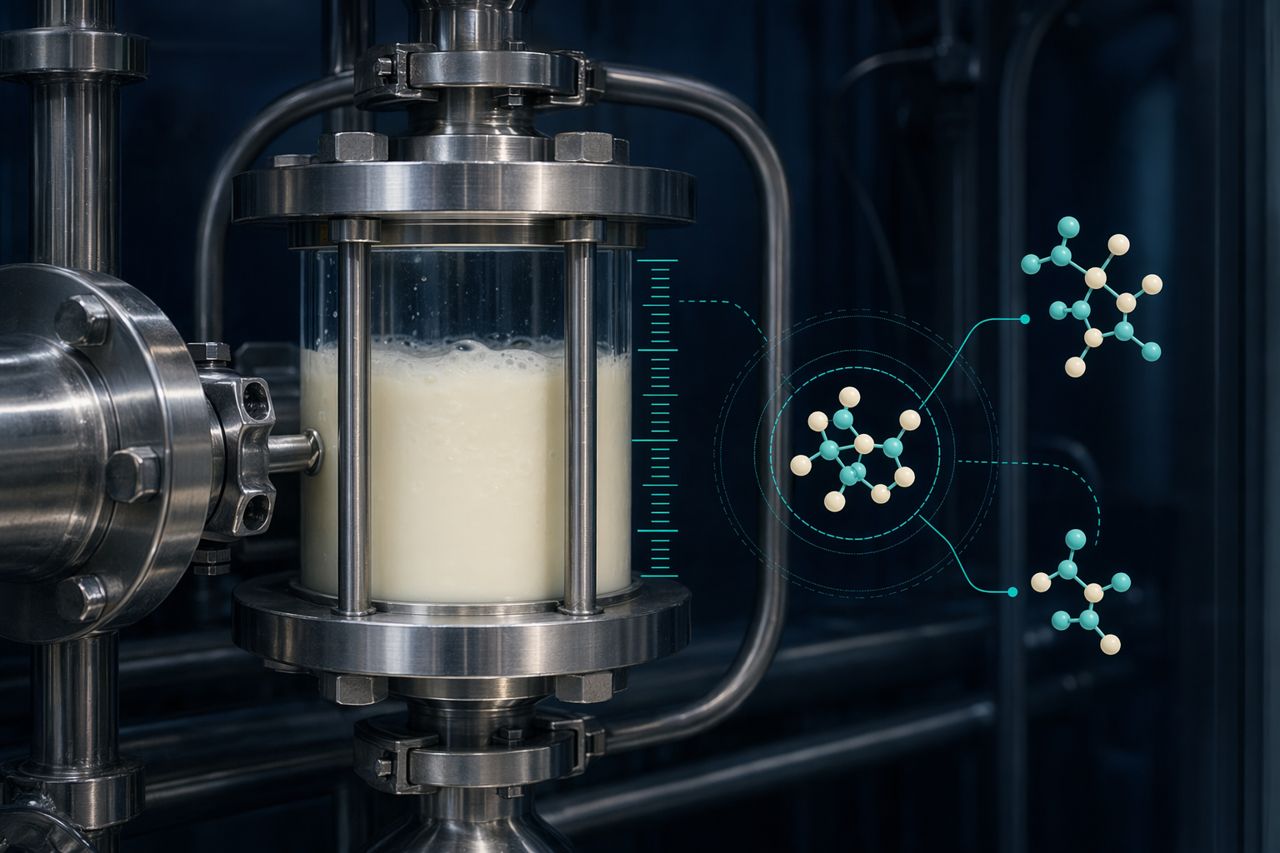
Selecting Lactase for Food and Ingredient Applications
Lactase selection is not a generic purchasing step. The right Lactase (β-Galactosidase) profile depends on substrate, process window, desired lactose conversion, sweetness target, label strategy, and downstream stability requirements.
For dairy processors, ingredient manufacturers, beverage formulators, and private-label producers, the commercial question is simple: which lactase gives the required lactose reduction without slowing production or complicating specification control?
We supply lactase in bulk to dairies, ingredient makers and distributors. This guide lists the questions to settle before you ask for a quote, so the first quote is the right one.
Wholesale and bulk supply for manufacturers and resellers. Request a quote with the product, the quantity and the delivery country. Prices and lead times are quoted per order.
What lactase does in commercial formulation
Lactase hydrolyzes lactose into glucose and galactose. That conversion can support several operational outcomes:
- Lactose reduction for low-lactose or lactose-free positioning
- Natural sweetness lift from lactose hydrolysis, often allowing sweetness recalibration
- Improved dairy stability by reducing lactose-related crystallization risk in selected systems
- Faster process design when the enzyme is matched to temperature, pH, and hold-time realities
- Cleaner label architecture by enabling sweetness and digestibility benefits without unnecessary formulation complexity
- Consistent batch control through agreed specification and documentation support
The best choice is rarely the strongest lactase on paper. It is the lactase that performs predictably inside your real process.
Start with the application, not the enzyme name
Fluid milk and lactose-free dairy drinks
For milk and ready-to-drink dairy beverages, buyers usually prioritize predictable lactose reduction, mild process impact, and sensory neutrality. Key selection questions include:
- Is the enzyme intended for pre-treatment, in-tank conversion, or post-standardization addition?
- Will the process use refrigerated, ambient, or elevated-temperature holding?
- What lactose claim or internal conversion target must be supported?
- How will sweetness increase affect the final flavor profile?
- Is the product heat-treated after hydrolysis?
A practical lactase should align with production scheduling. If the enzyme requires a process condition that the plant cannot hold consistently, specification risk increases.
Yogurt, fermented dairy, and cultured products
In cultured systems, lactase can influence substrate availability, sweetness perception, and fermentation dynamics. The selection lens changes from simple conversion to interaction with cultures and texture.
Evaluate:
- Addition point relative to culture inoculation
- Compatibility with fermentation pH movement
- Impact on sweetness balance after fermentation
- Potential influence on body, mouthfeel, and syneresis
- Label and claim requirements for the finished product
For yogurt and cultured dairy, technical service is important. A supplier should be able to discuss process fit without forcing a one-size enzyme recommendation.
Ice cream, frozen desserts, and sweetened dairy bases
Lactase can help manage lactose crystallization risk and improve perceived sweetness in frozen systems. Selection should account for fat level, solids profile, sweetener system, and aging procedure.
Ask whether the lactase is intended to:
- Reduce lactose crystallization risk
- Support smoother texture during storage
- Reduce added sweetener pressure
- Improve sweetness distribution in high-solids bases
- Fit into aging or mix-preparation timing
The commercial value is not only lactose reduction. It is texture control, sensory polish, and fewer quality complaints through shelf life.
Whey, permeate, and ingredient streams
Ingredient manufacturers often use lactase to increase downstream utility of lactose-containing streams. Here the priorities are throughput, conversion predictability, and compatibility with concentration or drying steps.
Important considerations include:
- Solids concentration and viscosity
- pH and mineral load
- Processing temperature profile
- Desired reducing sugar composition
- Downstream concentration, evaporation, or drying behavior
- Documentation needs for customer specifications
For ingredient applications, supply reliability and lot consistency matter as much as enzyme performance.
Bakery, confectionery, and prepared foods
In non-fluid applications, lactase selection depends on where lactose is present and what the hydrolysis is expected to change. The purpose may be sweetness adjustment, browning behavior, digestibility positioning, or dairy ingredient optimization.
Define the commercial objective first. Then match the lactase to the ingredient stream, not just the final finished food.
Technical fit: the five questions buyers should ask
1. What is the target lactose outcome?
Be clear whether you need lactose-free positioning, partial lactose reduction, sweetness control, crystallization management, or ingredient stream conversion. Each objective creates a different process target.
2. What is the real process window?
Document the conditions your plant can actually maintain: temperature range, pH range, hold time, mixing behavior, and order of addition. The strongest selection work happens when the lactase is chosen around plant reality rather than ideal lab conditions.
3. What happens after hydrolysis?
Heat treatment, fermentation, concentration, drying, freezing, and packaging can all influence the preferred lactase format and process strategy. Buyers should evaluate the full production path, not only the hydrolysis step.
4. How will sweetness change be managed?
Lactose hydrolysis increases sweetness perception because glucose and galactose taste sweeter than lactose. This can be a benefit, but it must be controlled.
Commercial teams should decide whether the sweetness lift will be used to:
- Reduce added sugar or sweetener load
- Improve flavor roundness
- Support a cleaner ingredient declaration
- Maintain the existing sensory profile with formulation adjustment
5. What documentation is required?
Before purchasing, confirm required documentation for your quality, regulatory, and customer teams. Typical B2B requirements may include specification sheet, allergen statement, non-GMO position where applicable, food-grade declaration, origin information, batch documents, and shelf-life guidance.
Liquid or powder lactase: which format fits?
Liquid lactase
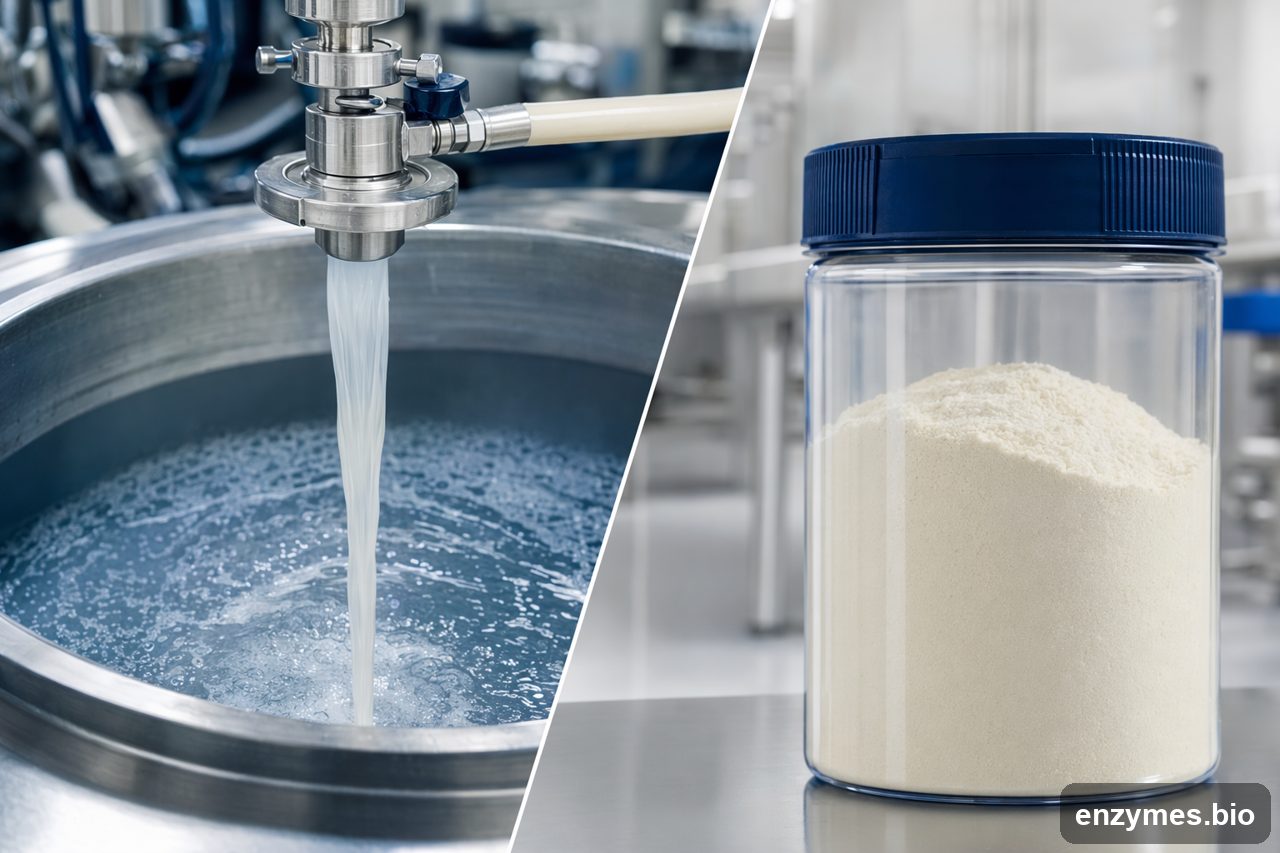
Liquid formats are often preferred for dosing convenience and rapid dispersion in fluid systems. They can be a practical fit for dairy plants with pumpable dosing infrastructure and controlled storage.
Best-fit priorities:
- Fluid milk and dairy beverage operations
- In-tank or inline addition strategies
- Fast blending into liquid substrates
- Operations that value dosing simplicity
Powder lactase
Powder formats may be preferred for dry blending, ingredient premix systems, export logistics, or facilities seeking storage and handling flexibility.
Best-fit priorities:
- Ingredient manufacturers
- Dry mix or premix operations
- Distribution-sensitive supply chains
- Formulators needing format flexibility
The format decision should consider handling, storage, dosing accuracy, plant hygiene, and operator workflow.
Specification support: what to confirm before ordering
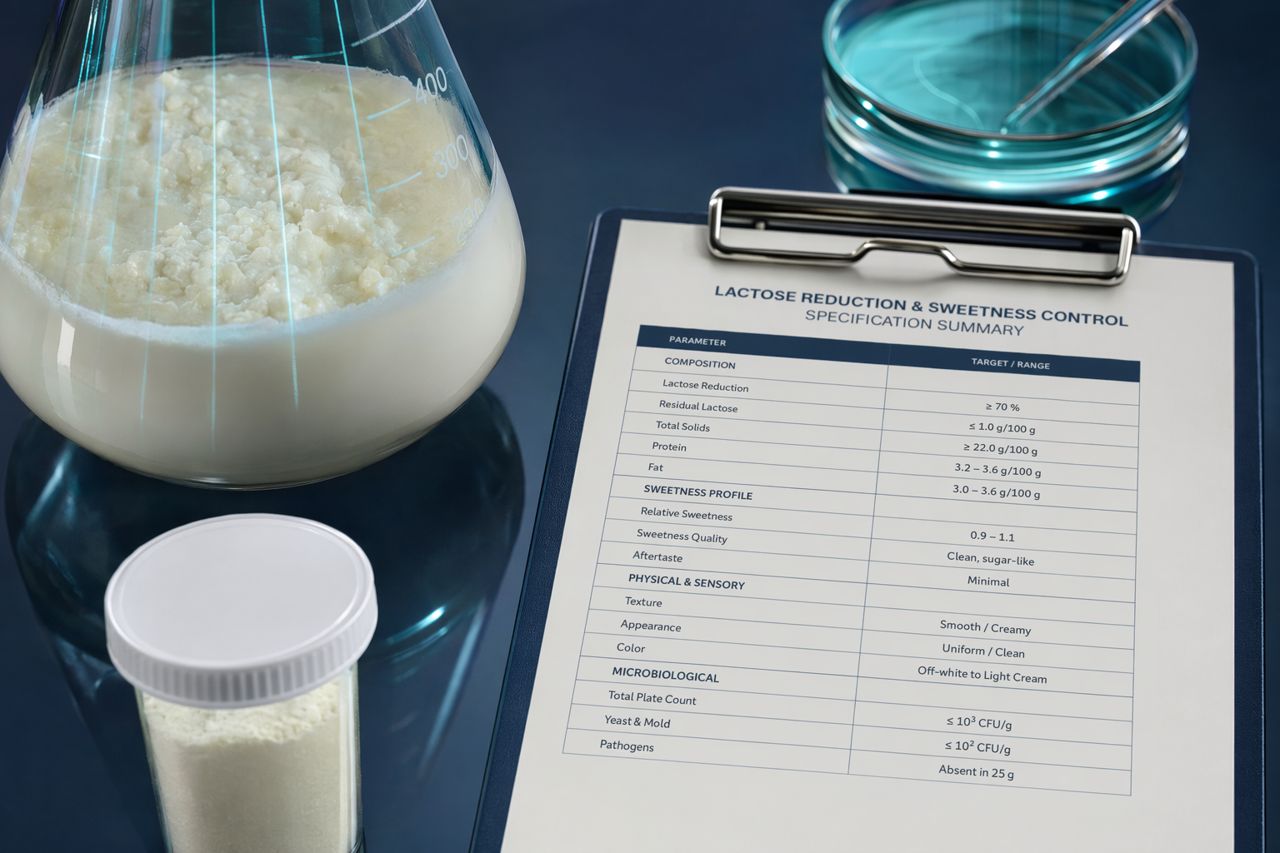
A professional lactase purchase should be tied to a clear specification framework. Before commercial supply, confirm:
- Product format and appearance
- Recommended storage conditions
- Declared shelf life
- Food-grade suitability
- Allergen and dietary positioning
- Country or region of origin, where required
- Packaging configuration
- Batch documentation availability
- Lead time and supply continuity
- Sample availability for internal trials
Avoid vague purchasing. Lactase is a process input, not a commodity line item.
Common selection mistakes
Choosing only on price
A lower price can disappear quickly if the enzyme requires longer holding, causes inconsistent conversion, creates flavor drift, or complicates documentation.
Ignoring sweetness impact
Hydrolysis changes taste. If sweetness is not modeled before trial work, product development teams may need avoidable reformulation cycles.
Trialing outside plant reality
A bench trial that uses conditions the plant cannot replicate may produce misleading confidence. Define the commercial process first.
Treating all dairy matrices alike
Milk, yogurt base, ice cream mix, whey permeate, and high-solids concentrates are different substrates. Lactase selection should reflect that.
Buyer checklist before requesting pricing
Prepare these details to receive a relevant recommendation and quotation:
- Application category and product type
- Substrate composition or general matrix description
- Target lactose reduction or finished-product claim
- Process temperature and pH range
- Available hold time
- Addition point in the process
- Post-treatment steps such as heating, fermentation, concentration, drying, or freezing
- Preferred liquid or powder format
- Packaging preference
- Trial quantity and expected scale-up volume
- Required documents for quality approval
- Target commercial timeline
The more precise the process brief, the faster the path to a usable lactase recommendation.
Request a quote or get pricing
We supply lactase for dairy, whey, frozen dessert, bakery and ingredient applications.
Our stock grade is acid lactase powder in 1 kg packs, in three activity grades. For neutral liquid grades, ask us.
Send us:
- the product you make and where the enzyme goes in
- the quantity per order or per month
- the delivery country
- the pH and temperature at the point of dosing, and the hold time
Prices, quantities and lead times are quoted per order.