Lactose-free dairy does not taste sweeter because it automatically contains more sugar. It tastes sweeter because lactase changes the structure of the sugar already present in milk.
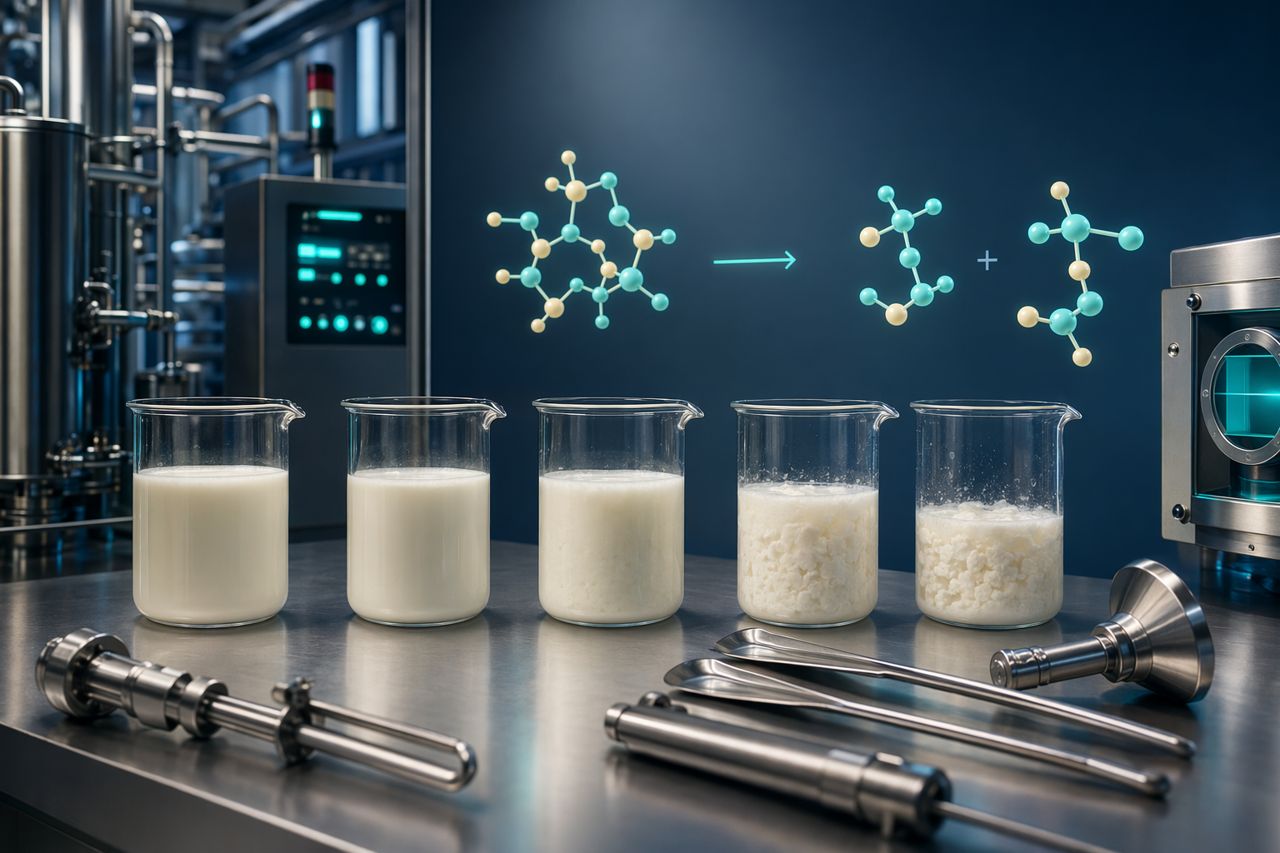
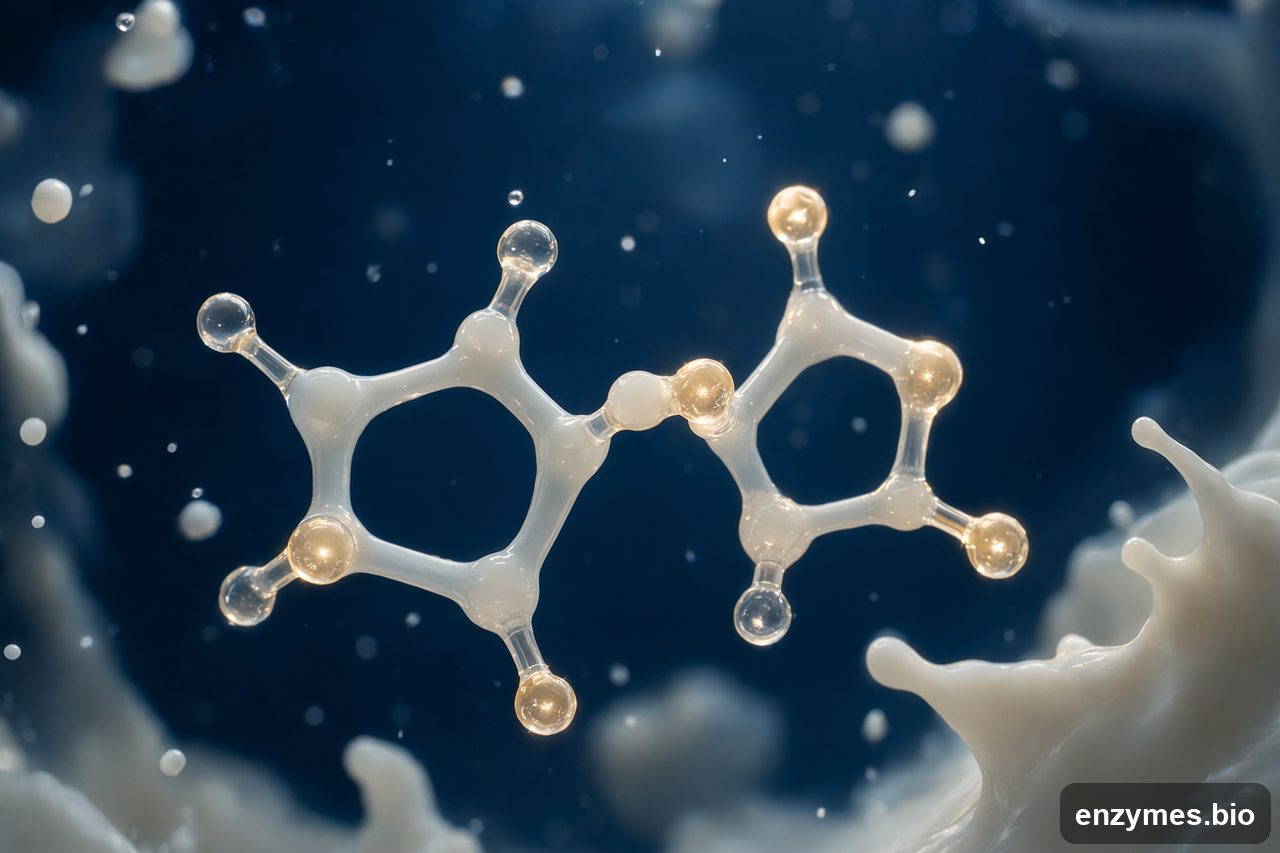
Lactase, properly known as Lactase (β-Galactosidase), hydrolyzes lactose into glucose and galactose. Lactose is only mildly sweet. Glucose and galactose are perceived as sweeter by the palate, so the same dairy base can deliver a noticeably rounder, sweeter taste after hydrolysis.
For a dairy or dessert maker, that sweetness is a formulation variable you can sell: less added sugar on the label and a rounder taste from the milk you already use. We supply lactase in bulk to the dairies, ice cream and dessert makers and drink producers who use it, and to the distributors that serve them.
Wholesale and bulk supply for manufacturers and resellers. Request a quote with the product, the quantity and the delivery country. Prices and lead times are quoted per order.
The core mechanism: one dairy sugar becomes two sweeter sugars
Milk naturally contains lactose, a disaccharide made from two linked monosaccharides: glucose and galactose. Lactase cleaves that bond.
Before hydrolysis:
- Lactose remains mostly intact
- Sweetness perception is relatively low
- Mouthfeel and dairy notes dominate the profile
After hydrolysis:
- Lactose is reduced
- Glucose and galactose increase
- Perceived sweetness rises
- Dairy flavor can read as smoother, rounder, and more developed
This is why a lactose-free milk can seem sweeter than its conventional counterpart even when no sucrose, syrup, or high-intensity sweetener has been added.
Why this matters commercially
Sweetness is one of the first things consumers notice in lactose-free dairy. If it is well managed, it can improve preference and support a cleaner label. If it is not controlled, it can push the product into an over-sweet, cooked, or unbalanced profile.
For B2B formulation teams, lactase treatment can support:
- Sugar-label discipline: Reduce or avoid added sweeteners in selected applications.
- Cleaner flavor architecture: Build sweetness from the milk substrate itself.
- Better lactose-free positioning: Deliver the expected digestive benefit without making the product taste compromised.
- Improved sensory balance: Offset acidity, cocoa bitterness, coffee notes, high-protein dryness, or cultured dairy sharpness.
- More flexible product design: Tune sweetness through process timing and enzyme selection rather than only through ingredients.
Application impact by dairy format
Lactose-free milk
In plain milk, hydrolysis often creates a smoother and slightly sweeter profile. This can be desirable for direct drinking, but the target must be deliberate. Too much perceived sweetness can reduce the “fresh milk” character some markets expect.
Key development questions:
- Is the product positioned as neutral, naturally sweet, or indulgent?
- Will it be UHT, ESL, pasteurized, or aseptically processed?
- Should hydrolysis occur before or after heat treatment?
- How much sweetness lift is acceptable for the market benchmark?
Flavored milk
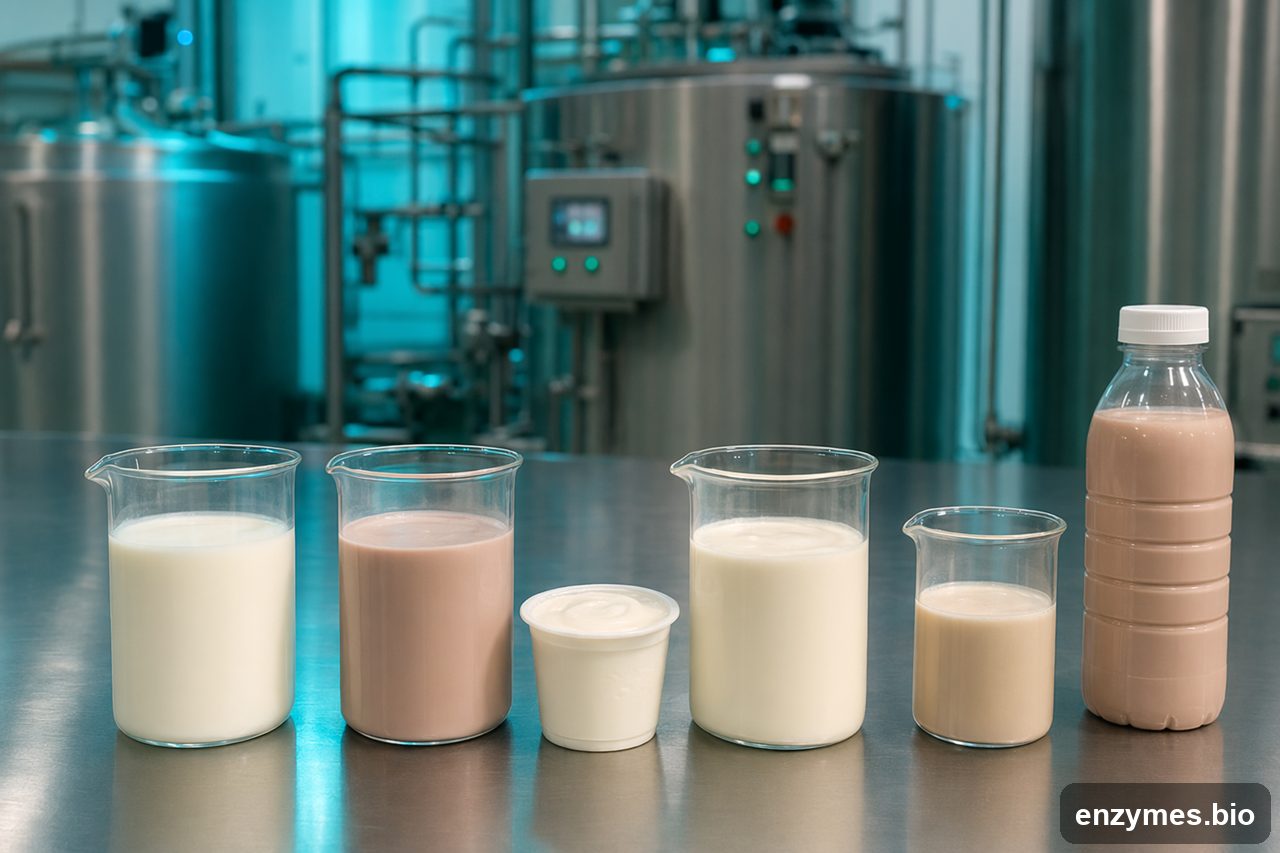
Chocolate, vanilla, coffee, and fruit-flavored milks can benefit from lactose hydrolysis because the sweetness contribution from glucose and galactose may allow lower added sugar.
Practical advantages:
- Less added sucrose or syrup may be needed
- Cocoa bitterness can be softened
- Vanilla and caramel notes may appear fuller
- Sweetness can be built into the dairy phase before flavor balancing
The development risk is overshooting. Once hydrolysis contributes sweetness, the sweetener system should be recalibrated, not simply copied from a conventional formula.
Yogurt and cultured dairy
In yogurt, the increased sweetness from hydrolysis can help balance lactic acidity. It may also influence fermentation behavior because glucose and galactose are more accessible to certain cultures than intact lactose.
Product teams should evaluate:
- Fermentation curve and final acidity
- Culture selection
- Fruit preparation sweetness
- Post-fermentation flavor balance
- Refrigerated shelf-life sensory drift
Ice cream and frozen desserts
In frozen dairy, lactose hydrolysis can affect sweetness, freezing behavior, and lactose-related crystallization risk. The sweetness lift can be useful, but it must be balanced against solids, overrun, flavor intensity, and serving temperature.
Potential development gains:
- Smoother sweetness perception at low temperature
- Lower risk of lactose crystallization in selected systems
- Improved sweetness distribution in reduced-added-sugar concepts
- Cleaner label pathways compared with complex sweetener blends
Creamers and ready-to-drink protein beverages
Creamers, RTD protein drinks, and fortified dairy beverages often need sweetness that masks bitterness, mineral notes, or heat-process flavors. Lactase treatment can provide sweetness from the dairy carbohydrate fraction while helping achieve lactose-free claims.
Important checks include:
- Protein stability during heat processing
- Flavor interaction with coffee, cocoa, or nutritional systems
- Final sweetness after shelf-life storage
- Compatibility with stabilizers and minerals
The sweetness curve is process-dependent
The sweetness effect is not a single fixed outcome. It depends on how the lactase is applied and where hydrolysis sits in the manufacturing flow.
Key control points include:
-
Enzyme selection
Different lactase profiles behave differently across dairy matrices. Selection should match product pH, temperature range, processing sequence, and desired sensory endpoint. -
Contact time
More contact time generally means greater lactose conversion, up to the practical endpoint of the process. Sensory testing should be aligned with the lactose target, not treated as a separate exercise. -
Temperature window
Hydrolysis speed and process compatibility depend heavily on temperature. The goal is to fit the enzyme step into the plant’s real operating conditions without creating bottlenecks. -
Point of addition
Lactase may be used before heat treatment, during refrigerated holding, or in other controlled process steps depending on the product. Each option changes risk, timing, and sweetness development. -
Enzyme stop or carry-through strategy
In some processes, heat treatment stops enzymatic action. In others, the team must understand whether residual activity could continue to change the product profile during storage.
Formulation guidance: control sweetness before adding sweeteners
When developing a lactose-free dairy product, do not finalize the sweetener system until the hydrolysis target is established.
A practical sequence is:
- Define the lactose-free claim requirement and internal lactose target.
- Select the lactase profile that fits the product matrix and plant process.
- Run pilot batches to map sweetness at different hydrolysis levels.
- Adjust added sugar, flavors, acid balance, and stabilizers after hydrolysis is understood.
- Validate sensory performance at release and through shelf life.
This prevents a common problem: a conventional recipe is converted to lactose-free, but the original sweetener level remains unchanged. The result may be technically successful yet commercially too sweet.
What developers should measure in trials
For a lactose-free sweetness trial, sensory and operational data should be captured together.
Recommended evaluation points:
- Lactose reduction against the finished-product target
- Perceived sweetness versus the non-hydrolyzed control
- Flavor release and aftertaste
- Acidity balance in cultured systems
- Heat-process flavor development
- Texture and viscosity
- Shelf-life sweetness stability
- Consumer benchmark comparison
- Plant processing time and hold requirements
The best lactase choice is rarely just the fastest option. It is the option that gives the required lactose reduction, the right sweetness curve, and the most reliable fit with production reality.
Cleaner label opportunity
Because hydrolysis increases perceived sweetness from the dairy substrate itself, lactase can support cleaner label development in selected formulas. It may reduce dependency on added sugars or complex sweetener systems, especially where the product already contains milk solids.
That does not mean lactase replaces all sweetener strategy. Instead, it gives formulators another lever: sweetness generated inside the dairy matrix, with lactose-free functionality as part of the same process.
Buying lactase for a sweetness-controlled product
The sweetness you get depends on how far hydrolysis runs, so the grade has to fit the pH, the temperature and the hold time of your process. For fresh milk and other near-neutral bases, ask about neutral liquid grades. Our stock grade is acid lactase powder in 1 kg packs, in three activity grades.
Tell us the product, how much sweetness lift you want and how much added sugar you hope to remove; we reply with the grade that fits and a quote.
Bottom line
Lactose-free dairy tastes sweeter because lactase converts lactose into glucose and galactose, which register as sweeter sugars. The total carbohydrate profile may remain broadly similar, but the sensory profile changes significantly.
For developers, that means lactase is not only a lactose-reduction tool. It is a sweetness-control tool, a cleaner-label lever, and a process design decision.
The commercial goal is not maximum sweetness. The goal is controlled lactose reduction with the right sensory endpoint for the product, market, and manufacturing line.
Request a quote or get pricing
We supply lactase for lactose-free milk, flavoured milk, yogurt, ice cream, creamers and protein drinks.
Our stock grade is acid lactase powder in 1 kg packs, in three activity grades. For neutral liquid grades, ask us.
Send us:
- the product and its pH at the point of dosing
- the temperature and hold time you can give the enzyme
- the quantity per order or per month
- the delivery country
Prices, quantities and lead times are quoted per order.