Lactase is a precision processing tool. The value is not only in hydrolyzing lactose into glucose and galactose; it is in doing so predictably across receiving, storage, batching, incubation, and finished-product release.
For operations teams, the handling question is direct: how do you protect enzyme performance from warehouse to tank? For procurement teams, the question is equally practical: how do you specify a lactase that arrives stable, fits the process, and supports consistent lactose reduction without overcomplicating the label or the line?
This guide is for dairies, ingredient makers and distributors who hold lactase stock: how to store it, move it to the line and dose it without losing activity.
Wholesale and bulk supply for manufacturers and resellers. Request a quote with the product, the quantity and the delivery country. Prices and lead times are quoted per order.
What lactase does in the process
Lactase cleaves lactose into two simpler sugars: glucose and galactose. In commercial dairy production, that conversion supports:
- Lactose reduction in milk, cream, whey streams, fermented dairy bases, and dairy beverage systems
- Sweetness lift without adding sucrose or high-intensity sweeteners
- Improved digestibility positioning for lactose-free and lactose-reduced products
- Texture and stability support in certain dairy matrices where lactose crystallization or solids behavior matters
- Cleaner label formulation by using enzymatic conversion rather than additional sweetening systems
- More efficient processing when enzyme selection, temperature, pH, and hold time are aligned
The enzyme is not a generic ingredient. It is a process input with sensitivity to storage temperature, contact conditions, sanitation chemistry, and production timing.
Storage priorities: protect stability before use
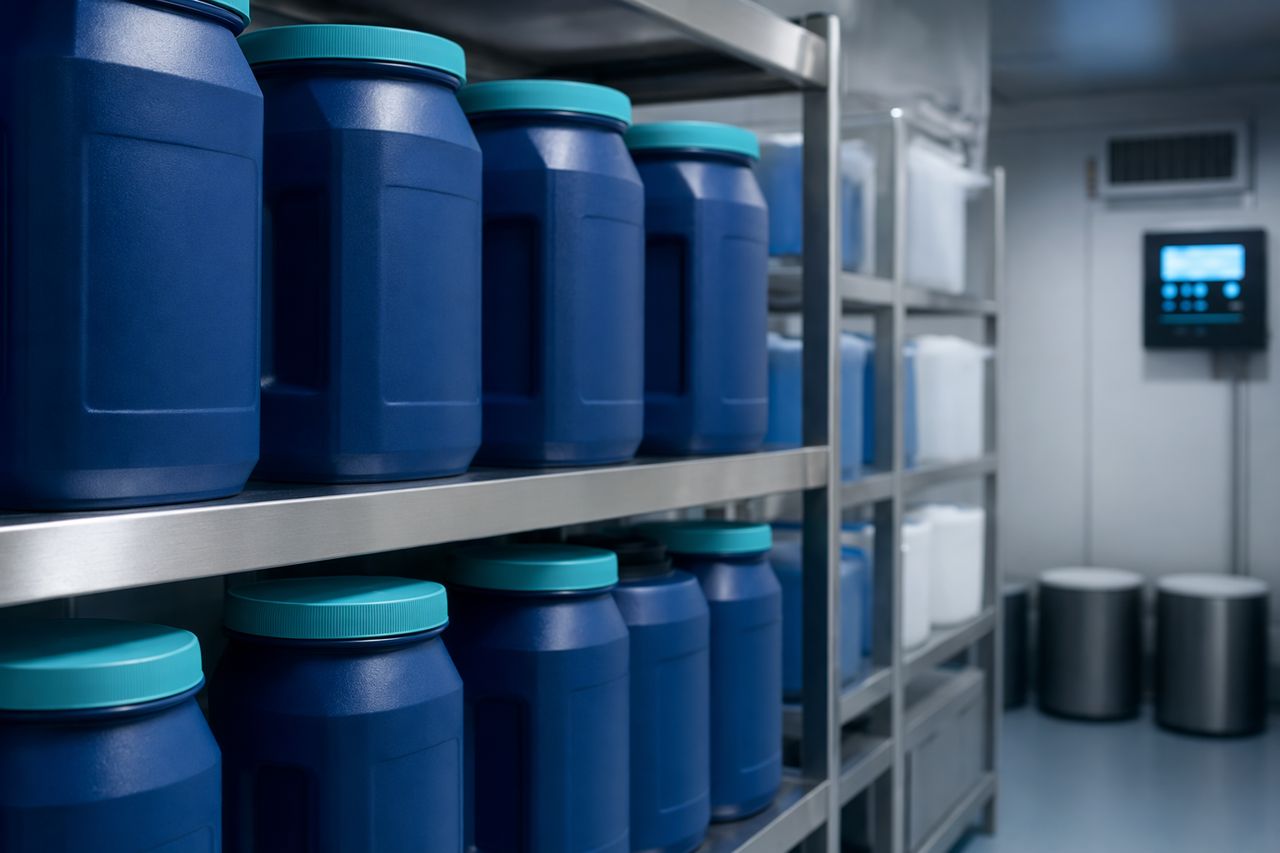
Lactase should be stored to preserve enzyme performance until the point of addition. Exact storage conditions depend on the supplied format and specification, but the operating priorities are consistent.
Keep temperature controlled
Avoid temperature abuse. Extended exposure to heat can reduce usable performance and create variability between batches. If the product is supplied as a liquid, cold-chain or cool storage may be required depending on the specification. Powder formats should be protected from heat and humidity.
Operational best practice:
- Store in the original sealed container until use
- Keep away from steam lines, warm processing rooms, and direct sunlight
- Use temperature-monitored storage where possible
- Avoid repeated warming and cooling cycles
- Do not leave opened containers on the production floor longer than necessary
Control moisture and contamination
Powdered lactase should be protected from moisture uptake. Liquid lactase should be protected from microbial contamination and accidental dilution.
Use these controls:
- Reseal containers immediately after opening
- Use clean, dry tools for powders
- Use sanitized, compatible transfer equipment for liquids
- Do not return unused material to the original container unless the procedure is validated
- Segregate enzyme handling from high-moisture or high-aerosol zones where practical
Rotate stock with discipline
Enzyme performance is easier to manage when inventory is controlled.
Recommended practice:
- Apply first-expiry, first-out rotation
- Check lot, shelf life, and storage status before issue
- Record opening date for partially used containers
- Quarantine containers with compromised seals, heat exposure, or unknown storage history
- Align purchase quantities with realistic production consumption
Procurement should specify packaging size to match plant usage. A technically suitable lactase can still create waste if the pack size forces repeated openings or long post-opening hold times.
Handling lactase on the production floor
Lactase should enter the process cleanly, evenly, and at the correct point. Poor handling can create uneven hydrolysis, under-conversion, localized overexposure, or sanitation risk.
Confirm the addition point
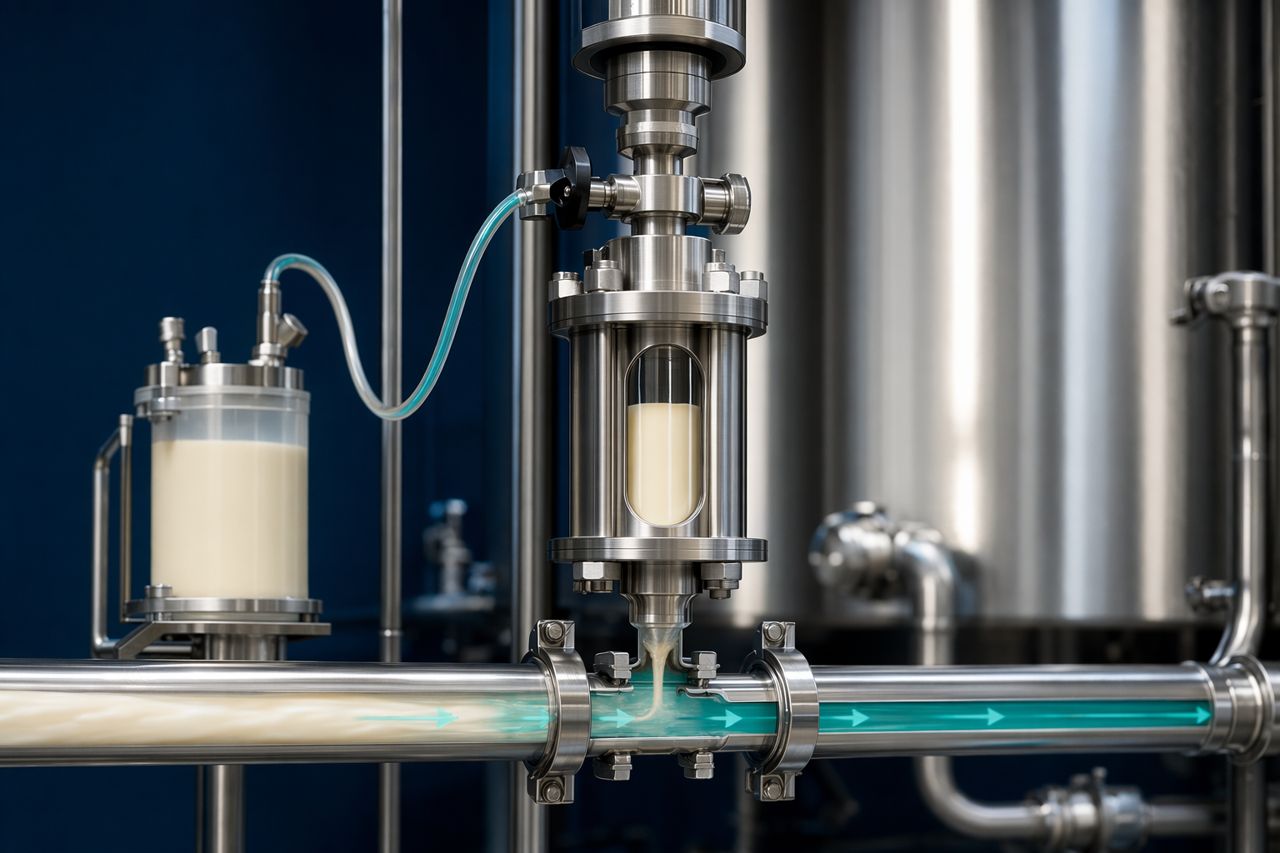
The right addition point depends on product type and process design. Common approaches include dosing into raw or pasteurized milk, adding into cooled dairy bases, or introducing the enzyme during a controlled incubation stage.
Key considerations:
- Whether the enzyme must remain active through a hold step
- Whether a later heat treatment is intended to stop activity
- Whether fermentation cultures will be present
- Whether the product is filled after hydrolysis or hydrolyzed in pack
- Whether the process is batch, continuous, or semi-continuous
The goal is controlled conversion, not uncontrolled residual activity.
Ensure uniform mixing
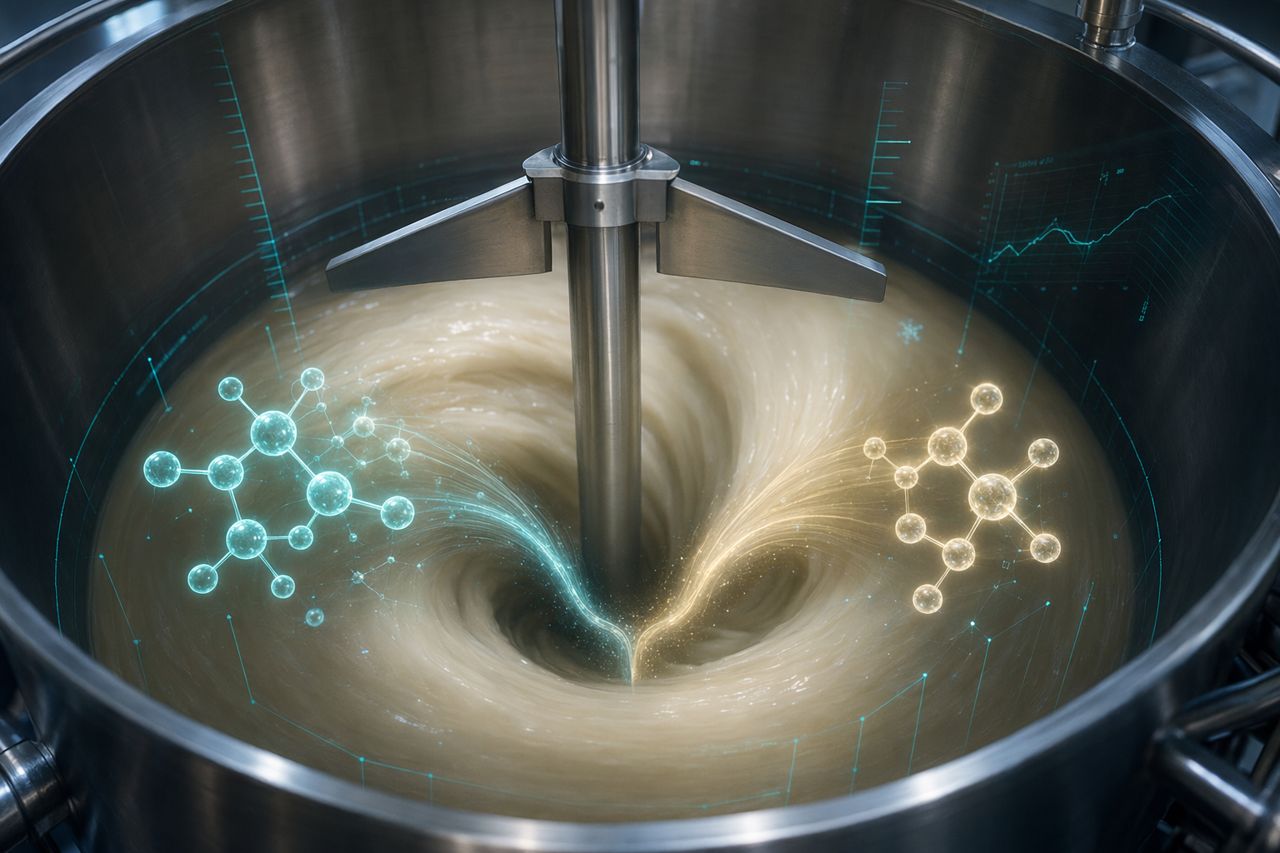
Lactase must be dispersed evenly. Incomplete mixing can cause inconsistent lactose reduction within the same tank.
Practical controls:
- Add into a zone with verified agitation or inline turbulence
- Avoid dead zones and slow recirculation paths
- Pre-dilute only if allowed by the specification and plant hygiene procedure
- Confirm dosing pumps, scales, or metering systems are calibrated
- Document addition time, lot number, and tank identification
Avoid chemical incompatibility
Enzymes are proteins. Residual cleaning chemicals or extreme process conditions can reduce activity or damage performance.
Before dosing, confirm:
- Rinse completion after CIP
- No sanitizer carryover in the receiving line or tank
- Process pH is within the enzyme’s intended operating range
- Product temperature is aligned with the planned hydrolysis window
- Any preservatives, minerals, stabilizers, or process aids are compatible with the selected lactase
Use conditions: align temperature, pH, and time
Lactase performance is driven by the interaction of enzyme selection, substrate concentration, temperature, pH, and contact time. A reliable lactose-reduction program is built around the actual matrix, not only theoretical conditions.
Temperature
Higher temperatures can accelerate hydrolysis up to the practical operating range of the enzyme, but excessive heat can reduce performance. Lower temperatures can be useful for long, controlled hydrolysis windows, but they require enough time to reach the target lactose level.
Typical planning questions:
- Is the process designed for rapid tank hydrolysis or longer cold hydrolysis?
- Will the enzyme be added before or after pasteurization?
- Is there a defined heat step to limit further enzyme action?
- Can the plant hold the product at a stable temperature for the required window?
pH
Dairy matrices differ. Milk, whey, fermented bases, and formulated beverages can present different pH environments. Select a lactase grade that fits the product and process rather than forcing the process to fit the enzyme.
Time
Hydrolysis is not instantaneous. Hold time should be established through plant trials and confirmed by the desired lactose-reduction target, sensory profile, and production schedule.
Important control points:
- Start timing after effective mixing is achieved
- Monitor actual tank temperature, not only setpoint
- Account for heating, cooling, and transfer delays
- Define acceptance criteria for the finished product
- Keep records that connect lot, dosage, condition, and outcome
Liquid vs powder lactase: handling implications
Both formats can work well. The best choice depends on plant design, dosing infrastructure, storage capability, and procurement priorities.
Liquid lactase
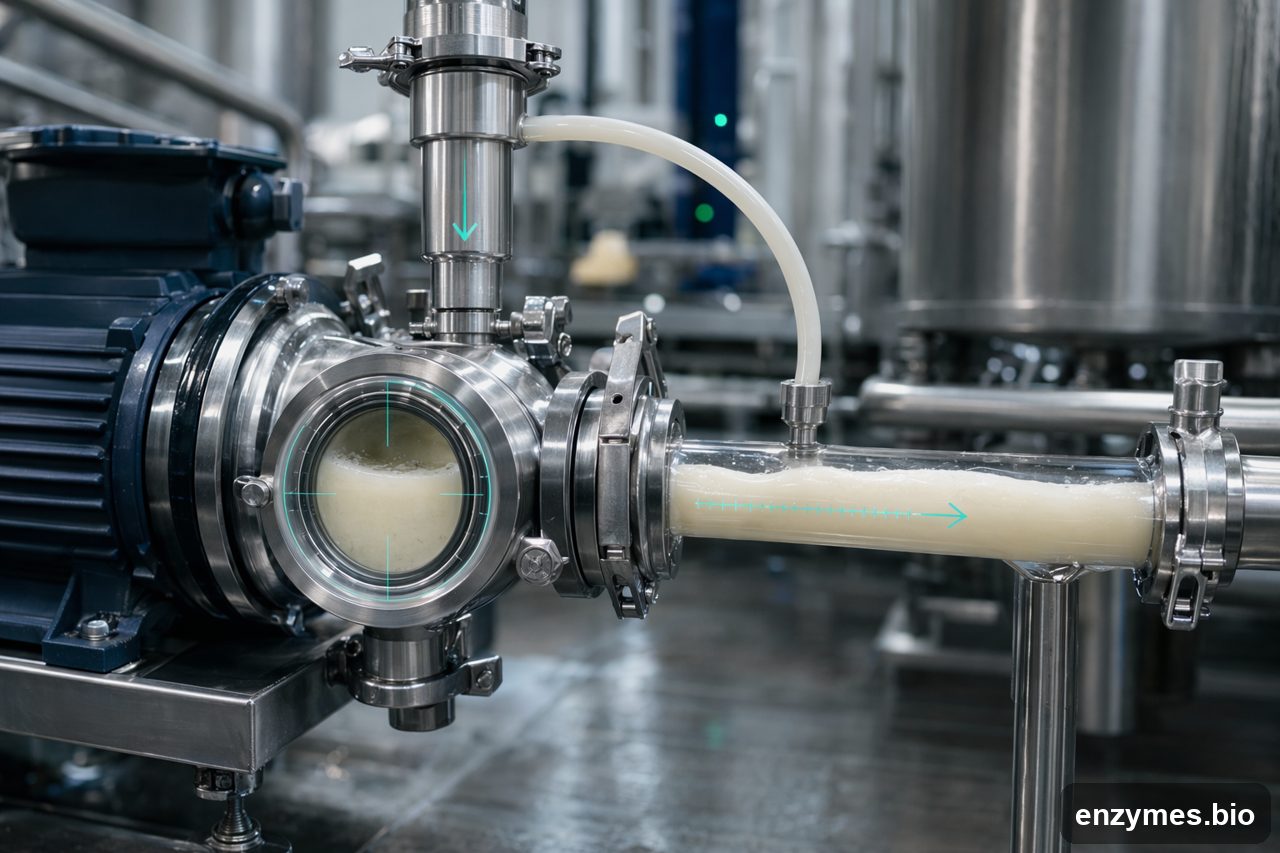
Liquid formats are often preferred for direct metering and fast dispersion. They can simplify automated dosing where hygienic pump systems are available.
Considerations:
- Storage temperature requirements may be tighter
- Containers should remain closed when not in use
- Transfer lines and pumps must be clean and compatible
- Viscosity and flow behavior should be considered in dosing setup
- Microbial control is critical after opening
Powder lactase
Powder formats can support flexible logistics and may suit plants with dry ingredient handling capability.
Considerations:
- Protect from humidity and condensation
- Prevent dusting and cross-contact during weighing
- Use controlled addition to avoid clumping
- Verify dispersion in the dairy matrix
- Keep opened containers tightly sealed
Common handling failures and how to prevent them
Inconsistent lactose reduction
Likely causes include poor mixing, incorrect addition timing, temperature drift, or dosing error.
Prevention:
- Verify agitation before addition
- Calibrate dosing equipment
- Document actual process conditions
- Confirm enzyme grade against product pH and temperature
Slower-than-expected hydrolysis
Likely causes include low process temperature, short hold time, enzyme storage damage, or incompatible matrix conditions.
Prevention:
- Review storage records and lot history
- Confirm temperature profile during the full hold
- Evaluate pH and formulation interactions
- Run a controlled plant trial before scale-up
Off-spec sensory profile
Lactose hydrolysis increases glucose and galactose, which can change perceived sweetness. In some products, this is a benefit; in others, it must be managed.
Prevention:
- Define the target sweetness profile early
- Match lactose reduction level to product positioning
- Consider downstream heat treatment and shelf-life conditions
- Evaluate taste at pilot and production scale
Residual activity concerns
If enzyme activity continues beyond the intended process window, sweetness and analytical results may continue to shift.
Prevention:
- Use a process design with a defined endpoint
- Apply heat inactivation where appropriate
- Select a lactase suited to the product’s thermal process
- Validate finished-product behavior over shelf life
Specification support for procurement teams
A strong lactase purchase specification should do more than list the enzyme name. It should connect commercial expectations to process reality.
Useful specification points include:
- Enzyme proper name: Lactase (β-Galactosidase)
- Format: liquid or powder
- Intended application: milk, cream, whey, fermented dairy, beverage base, or other matrix
- Storage requirements and shelf-life expectations
- Packaging size and closure type
- Allergen, dietary, GMO, and regulatory documentation needs
- Country or region of use
- Labeling and declaration requirements
- Technical support needed for trials or scale-up
Avoid specifying only price per kilogram. A lower-cost material can be more expensive if it requires longer hold time, creates dosing waste, or introduces variability.
Documentation to request before purchasing
For industrial use, request documentation that supports receiving, quality review, and customer audits.
Common documents include:
- Product specification sheet
- Safety data sheet
- Allergen statement
- GMO or non-GMO statement, where applicable
- Country-of-origin or manufacturing-origin information, where required
- Food-grade or regulatory compliance statements for the target market
- Storage and shelf-life guidance
- Lot-specific certificate of analysis, where applicable
Documentation should match the exact grade supplied, not a generic enzyme family description.
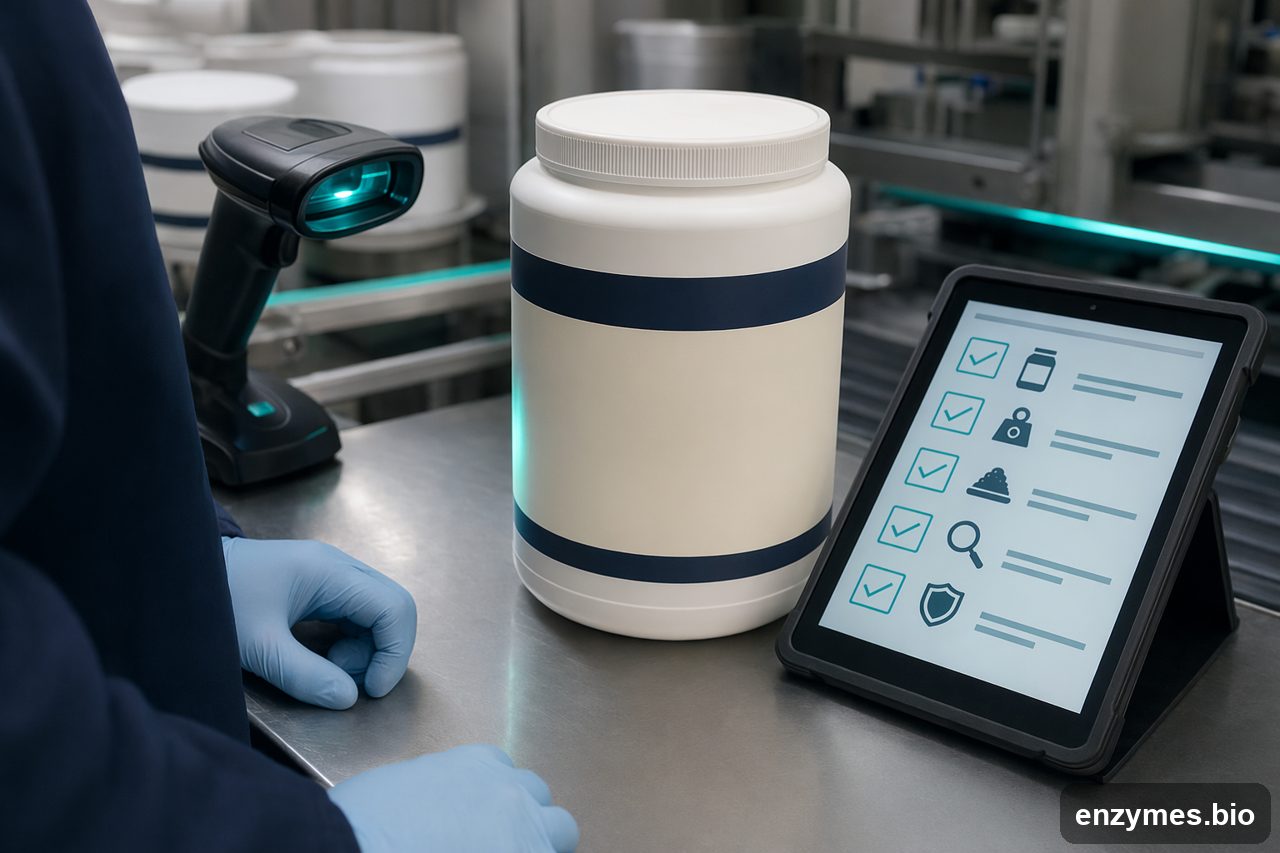
Practical receiving checklist
Use this checklist when lactase arrives at the plant:
- Confirm product name, lot number, and quantity against the purchase order.
- Inspect container integrity before acceptance.
- Check shipping temperature or exposure indicators if required by specification.
- Verify remaining shelf life against planned production date.
- Move immediately to the required storage area.
- Log receipt, storage location, and quality status.
- Hold product from use until internal release is complete.
Scale-up guidance: from trial to production
Pilot trials should reflect the real production environment as closely as possible. Lactase performance can shift when mixing, heat transfer, tank geometry, and hold time change.
For scale-up, document:
- Product matrix and lactose starting point
- Enzyme grade and lot
- Addition point and mixing method
- Actual temperature and pH profile
- Hold time and endpoint definition
- Sensory result, sweetness impact, and stability observations
- Any heat treatment or inactivation step
- Finished-product analytical target
A good trial does not only prove that lactose can be reduced. It proves that the plant can repeat the outcome.
When to involve technical support
Bring technical review in early when:
- Launching a new lactose-free or lactose-reduced dairy product
- Moving from one lactase grade or format to another
- Shortening hydrolysis time to improve throughput
- Changing packaging, shelf-life target, or heat process
- Working with high-solids, flavored, fermented, or stabilized systems
- Expanding from pilot batches to commercial tanks
The fastest route to a stable process is to align enzyme choice with plant constraints before full-scale production.
Request pricing or specification support
We supply lactase for dairy and lactose-reduction operations, and for distributors who stock it.
Our stock grade is acid lactase powder in 1 kg packs, in three activity grades. For neutral liquid grades, ask us.
Send us:
- the product you make and where the enzyme goes in
- the quantity per order or per month
- the delivery country
- how you will store it (chilled or ambient) and how fast you use a pack
Prices, quantities and lead times are quoted per order.